Newsletter #73: 🎁 Remembering the world is a gift
Parenthood, childhood, and what we forget
Know someone who might enjoy this newsletter? Forward this email to a friend, or share the web version here: https://caseys-means.beehiiv.com/p/newsletter-73
🎧️ Unlock the audio edition of this newsletter, personally read by Dr. Casey, and other offerings by becoming a Good Energy Steward.
“The earth, from here, is like heaven. It flows with colour. A burst of hopeful colour. When we’re on that planet we look up and think heaven is elsewhere, but here is what the astronauts and cosmonauts sometimes think: maybe all of us born to it have already died and are in an afterlife. If we must go to an improbable, hard-to-believe-in place when we die, that glassy, distant orb with its beautiful lonely light shows could well be it.”
Something I've been reflecting on since becoming a parent is how much of a child's life is made possible by parental work the child will never know about or even remember—and why the human experience seems to be "designed" this way.
For the first few years of a child's life, parents and caregivers attend to them around the clock. It is utterly joyful—the presence, smiles, and giggles my son shares with me are the greatest gifts I've ever received—but the practical work runs largely one way. My husband and I feed him, bathe him, clothe him, diaper him, take him on adventures. His only “job” is to receive it all—and to grow and thrive.
It makes me reflect on my own childhood, when I would come downstairs on holiday mornings to find my mom had completely transformed the dining room: streamers and balloons, gifts, a beautiful table setting, classical music playing, a gorgeous brunch in the kitchen… heart-shaped pancakes, bacon, cinnamon rolls, hash browns. My brother and I simply got to walk downstairs in our pajamas and delight in all of it. These are some of my most beautiful childhood memories.
I appreciated it at the time, and did what I could to express my thanks (I loved giving my mom elaborate foot baths and pedicures), but I had no real idea how much went into my parents creating those moments of joy: thinking of the gifts, buying them, wrapping them; planning the recipes, grocery shopping, cooking the food, cleaning it all up; putting up the decorations late at night, then taking them down and packing them in the garage; and paying for all of it through tireless work—all out of an internal drive to make my life a little happier, a little better, a little more joyful. Repeated hundreds of times.
I'm speechless and overwhelmed with gratitude just thinking about it now.
As a child, you simply cannot comprehend everything happening behind the scenes—not through any fault of your own; you simply haven't done that kind of work yet. And, because of infantile amnesia, you can’t even remember the years in which you received the most around-the-clock care—and yet those years shape your nervous system, your sense of attachment, your understanding of love, and your very capacity for joy. As an infant, you simply don't have the neurocircuitry to remember what was done for you, but for the rest of your life you are living inside the consequences of it. What a fascinating design.
All of this makes me think about God.
In so many ways, planet Earth is the holiday morning—and every morning that we have the privilege of waking up, we get to be the children coming down the stairs.
We live on an unbelievably spectacular planet—trees, animals, loving people, sunrises, sunsets, food, oceans, music, hugs. We live on the only planet we know of in the universe with life and consciousness. We inhabit bodies capable of experiencing pleasure and love.
And yet, how often do we consider who or what may have been "up all night after the kids went to bed," so to speak, crafting all of this tirelessly—with love—for our enjoyment and delight?
Most of the time, we assume that everything around us on planet Earth simply "exists." We have explanations for much of how it all came to be—the Big Bang, evolution, physics. We take it for granted. We pave over it. We look at our phones.
We are like that child on the holiday morning—experiencing everything around us as normal simply because that's how it has always been. And this isn't ingratitude: a child doesn't see the wrapping-paper scraps or the parent who went to bed exhausted, nor should they. They see the magic and receive it, which is what early childhood is for. Similarly, we don’t see the “work” that God might be doing, every second, to delight us. But as adults, we do have the capacity to reflect on that idea.
Having a son now, I know that his laughter, his face lighting up, his sheer existence… all of this is thanks greater than I could ever need or imagine.
Sometimes I stare at his smiling face and wonder if the joy of one child contains enough pure love to heal the whole world.
I wonder if God feels the same way about all of us.
Maybe our whole lives are a form of infantile amnesia. Maybe as humans we have simply forgotten the bigger picture—what came before our births, whether and how we are connected with God, the larger truth of our lives—because, just like a baby, our brains aren't yet constructed to hold it. Maybe there is so much more reality shaping our current existence that we just can’t remember.
I can't know.
But how fascinating that the beings among us who are the most present, seem to most fully embody love, and are the least jaded are the very ones who cannot speak and cannot remember. My 10-month-old son is clearer, more playful, and less judgmental than I am. He won’t be able to recall a single day of this year I will never forget. It all humbles me. I don't know what is and what isn't. I just want to be grateful.
Maybe that's the invitation of adulthood. We are no longer children, but we can learn from witnessing and reflecting on childhood—and from becoming parents ourselves. We have stayed up late, caring for precious little beings. We know what it feels like to labor over something for someone else’s happiness, to be responsible for another life. And we can bring that understanding to the world around us—wondering about the work behind it, and choosing to light up, smile, and be present and joyful when we get to experience its gifts.
I don't have my mother with me anymore. As anyone who has read Good Energy knows, she passed early and quickly from pancreatic cancer. I wish I would have shown up with even more gratitude and grace for all the work she did to make my childhood (and whole life) so beautiful, so loving. I would have shown up with less criticism.
When my sister-in-law, stepmom, and I recently planned a week celebrating my dad's 80th birthday, we poured our gratitude for my dad into trying to make it special—and I understood, as a parent now, that there is nothing I could ever do to fully express my thanks. The best I can do is show up with presence, love, and appreciation for him—and pay it forward to my own children and to the world.
And with my mom now passed, there is a poignancy and a pain in knowing that I can never again hug her and thank her in person.
I don't ever want to feel that way with God.
We are not children anymore. I don't want to reach the end of my life—and perhaps, in some way, encounter a bigger picture I couldn't see—only to realize I spent decades "enjoying the holiday morning" without making gratitude to the one who may have created it the core fabric of my life.
Just as my son's giggle is the greatest thanks he could ever give me, I want to be present enough to throw my head back and laugh freely in my life—on the faintest chance that my choosing joy might mean something to God.
I don't want to settle into rigid certainty about what God is or isn't, or whether God would or wouldn't want to be thanked, or whether any of our thanks would matter to God. I want to embrace the mystery and, in the humility of not knowing, default to relentless gratitude. I want to inhabit a life shaped by this awareness, in the hope that it changes me and my choices for the better—and, through me, possibly changes the world.
There are many things I may have forgotten—what came before my birth, my first years of life, exactly who or what God is. But I don't want to forget to say thank you.
Dr. Casey
✨ I love the traditional Jewish practice of reciting “Modeh Ani”— a short prayer said immediately upon waking: “I offer thanks to You… for You have mercifully restored my soul within me; Your faithfulness is great.” I especially love the interpretation that waking each morning means God has entrusted us with another day—and another opportunity to bring more light into the world. Read more here.

Facts inform us, but beauty can transform us. Dr. Casey’s Poem of the Month is a Steward-exclusive newsletter series that includes a poem and reflection to reconnect us with meaning, wonder, and awe, from my personal collection of favorite poems I’ve been compiling for over 20 years.
The second issue is coming this Thursday, September 3rd. Become a Good Energy Steward to gain access and get it straight in your inbox.
👀 Check out these new articles from dear friends
📱 “Reclaiming your kid's childhood from their screens starts here”, Opinion by Dr. Stephanie Haridopolos for USA Today
There is a particular kind of silence parents know well: a room full of children, together but apart, each looking down at a screen.
For many families, that scene has become ordinary. Phones fill car rides and restaurant meals. Social media follows teenagers into their bedrooms.
Screens are part of modern life, and they can do a lot of good. But childhood is short. As a family medicine physician for more than 20 years, a mother of three, and as director of national health communications for the Office of the Surgeon General, I keep coming back to a simple question: What are screens doing to childhood, and what are they replacing?
💪 “Muscle Isn't Vanity. Dr. Gabrielle Lyon Says It's Preventive Medicine” — An article about my trailblazing friend in TIME
For decades, muscle has been treated as something to sculpt, strengthen, or show off. Dr. Gabrielle Lyon wants people to think of it differently: as one of the body's most important organs—and one of the strongest predictors of how well we'll age.
In 2015, as a fellow in nutritional sciences and geriatrics at Washington University in St. Louis, Lyon cared for older adults with dementia and studied the relationship between body composition and brain function. She became convinced that medicine had spent decades asking the wrong question.
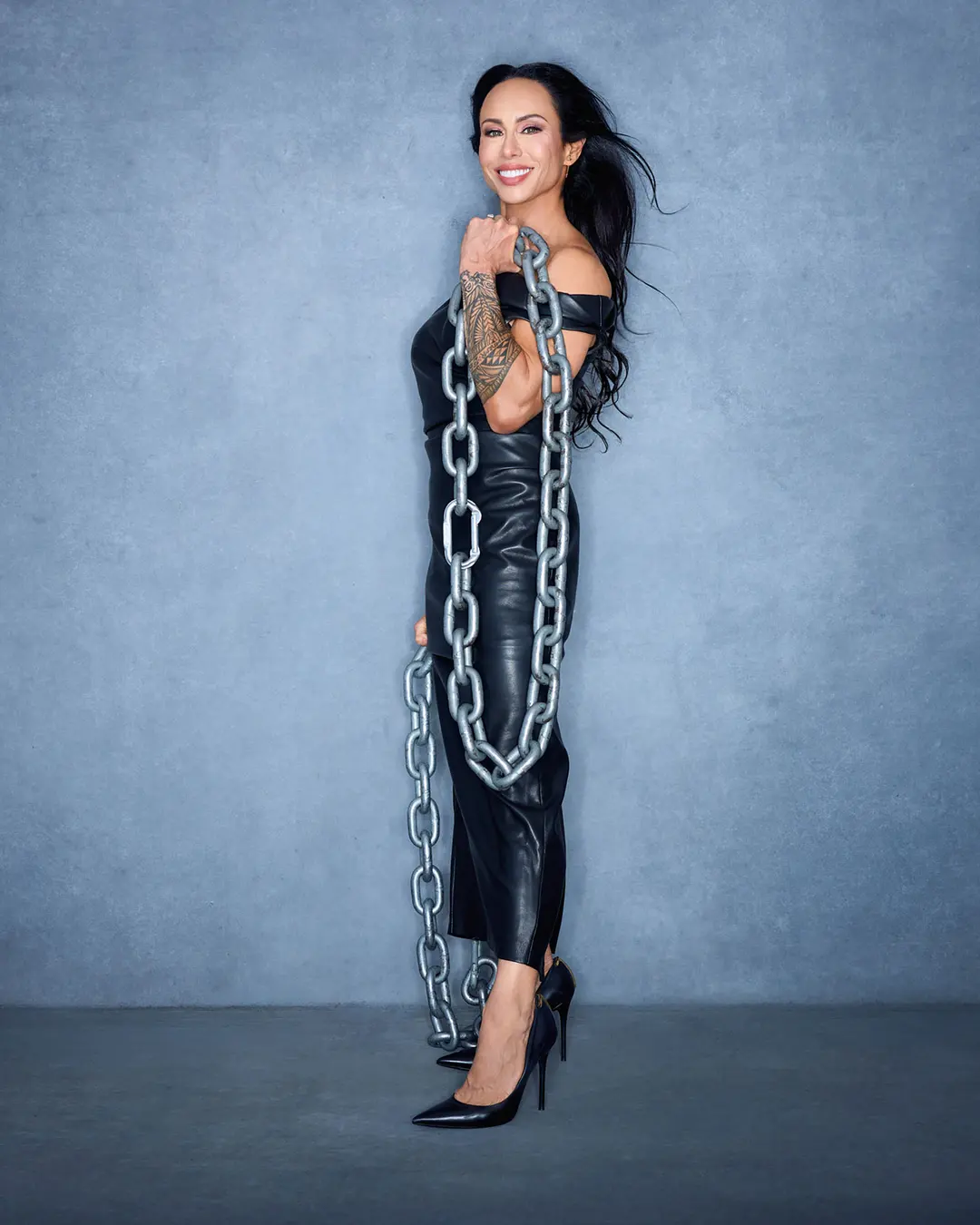
🩺 Join me on Friday, September 18th, for the Functional Medicine Is Longevity Medicine Masterclass
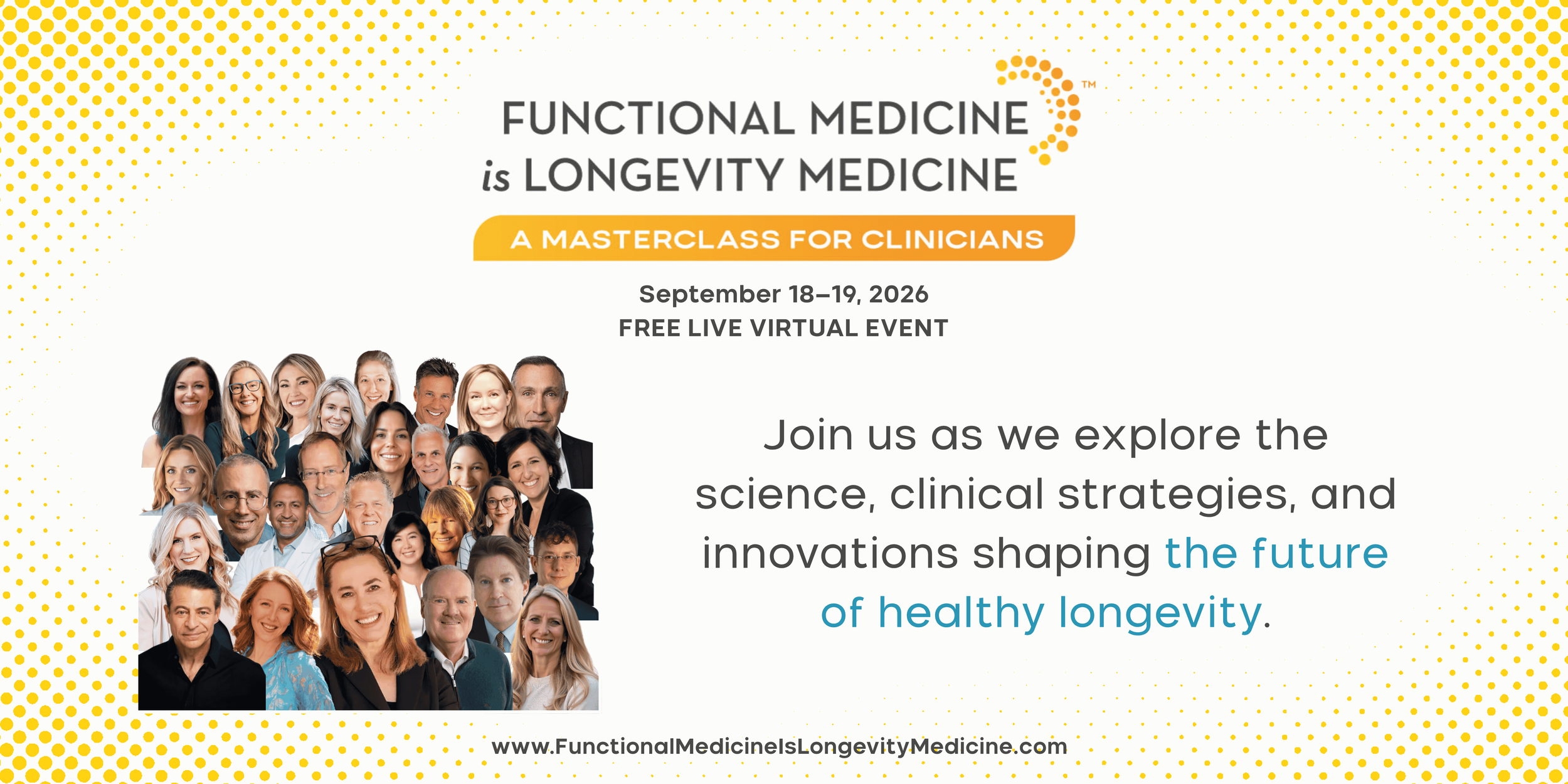
I'm excited to be joining Dr. Kara Fitzgerald and more than two dozen leading clinicians,
researchers, and innovators for the Functional Medicine Is Longevity Medicine
Masterclass, taking place virtually on September 18–19, 2026.
Over two live days, we'll explore many of the biggest questions shaping the future of
functional and longevity medicine, from biological age testing and AI, to women's health,
the microbiome, peptides, brain health, lifestyle medicine, and practical strategies for
delivering personalized longevity care.
The program features keynote presentations from Peter Diamandis, Jeff Bland, myself, Dale Bredesen, James LaValle, Aviva Romm, and many other leaders who are
advancing the science and practice of healthy aging.
Last year's Masterclass brought together 8,000+ registrants from 107 countries, and I'm
excited to be part of the conversation this year.
I will be part of the key opening session which is on September 18th at 10:45am PT / 1:45 ET. Looking forward to seeing you there!
Reserve your free spot HERE.
Note: Plan to attend live to get the full experience, including live Q&A, networking, and event-only discussions.
Share with a friend: If you enjoyed this issue, please share with a friend! They can sign up for the newsletter here.