Newsletter #79: 🍴10 New nutrition studies worth consuming
Plus, one study with major red flags

Know someone who might enjoy this newsletter? Forward this email to a friend, or share the web version here: https://caseys-means.beehiiv.com/p/newsletter-79
🎧️ Unlock the audio edition of this newsletter, personally read by Dr. Casey, and other offerings by becoming a Good Energy Steward.
Every month, I send a curated Research Roundup exclusively to the Stewards community. My goal with these roundups is to break down the latest published science across metabolic health, longevity, environmental toxins, nutrition, and overall human wellbeing—distilling peer-review research into actionable, real-world takeaways so you can make informed decisions for yourself and your family and stay up to date on the latest evidence on topics I think are really important (and sometimes overlooked!).
As someone passionate about bridging intuition with evidence, I love this particular roundup because all 10 of these recent papers point to the same truth we need to internalize: Food is NOT just calories. It is information that tells our cells how to behave and function. If I had to summarize these findings in one big, bold takeaway, it would be this: Eat as many whole, real foods as possible, and AVOID ultra-processed foods!
Today, I wanted to give everyone in our broader community a peek at what our Stewards receive.
Below is a shortened preview of this month’s Research Roundup covering 10 eye-opening studies. This is just one of the many monthly offerings you get with your Stewards membership, all for $7.77 per month. Sign up here. Becoming a Steward is also a great way to support my ability to offer a free Tuesday newsletter each week.
Enjoy, and have an incredible day!
Dr. Casey
In these 10 studies below, all published in the last three months, we see two meals with identical macronutrients sent different signals to insulin and to the brain's reward centers simply because one was ultraprocessed. Sugar during an antibiotic course amplified damage to the microbiome, and sugar in the first 1,000 days of life was linked to more cancer and faster biological aging 50 years later! Fiber and resistant plant proteins kept gut bacteria from eating away at our own protective gut mucus lining, and a compound our microbes make from pomegranates helped stiff, fibrotic hearts relax in the lab. Depression, prostate and stomach cancer, fatty liver, IBD and heart failure look like separate diseases, but these studies keep tracing them back to the same upstream roots: how our cells make and use energy (metabolism), how inflamed we are, and how well our microbiome is fed.
The hopeful part is how much of this is in our hands to control. Cutting ultraprocessed food lifted depressed mood in just four weeks (!), and the type of food eaten during weight loss changed how much liver fat melted away. The research also reminds us there is no single perfect diet: keto cleared liver fat in one trial, while whole grains were cardioprotective in another. The goal is not to chase one magic food or follow rigid dietary dogmas. It is to eat real, whole, fiber-rich food, keep sugar and ultraprocessed products ultra low, pay attention to food timing, and notice how your own body responds both through your subjective clues (how you feel, symptoms) and what your biomarkers show (objective data). Metabolic health is built from so many inputs, starting from our very first days of life.
If you’re interested in studies on oxalates, time-restricted eating, and inflammatory bowel disease, check out the Steward edition of this newsletter for extra papers.
Here's what the latest studies found. 👇️
📖 How to use this guide: 🚨🚨🚨 If you want the high level quick summary, just read the “Super Simple Summary (What You Need to Know!).” This is the key point to expand your understanding of where the science is going. Reading all 10 summaries will give you a ton of eye-opening info in 5 minutes. If you want to go deeper, check out the Overview, Authors’ Conclusion, and Why It Matters sections!
1️⃣ Reducing Ultraprocessed Foods From the Diets of Patients With Depression
September 23, 2026 · JAMA Psychiatry
Super Simple Summary (What You Need to Know!): People with depression who cut way back on ultraprocessed food for four weeks felt noticeably less depressed.
Overview: In this NIH-funded pilot crossover study, 20 adults with depression (average age 44, 70% women, 14 also with anxiety) spent four weeks on their usual diet and four weeks on a diet low in ultraprocessed foods. All had a high BMI and at least one metabolic disorder such as hypertension, diabetes or elevated LDL cholesterol. Participants bought their own food with guidance from the research team. They reduced ultraprocessed food intake by more than 85%, and showed moderate to large improvements on three separate depression measures, with modest improvement in anxiety.
Authors' Conclusions: Removing ultraprocessed foods is feasible for people with depression and was associated with meaningful symptom improvement. Because the study was small, the results are preliminary; a larger phase 2 trial is planned. The authors propose gut-lining damage and low-grade inflammation as a possible mechanism, which was not directly tested.
Why It Matters: It connects metabolic health and mental health through diet, supporting the idea that depression in people with metabolic disease may partly be a whole-body inflammatory and nutritional problem.
📖 Read More:
Good Energy, page 34: Depression
2️⃣ Metabolic and neural responses to ultraprocessed foods: a randomized, controlled, crossover study
October 5, 2026 · Nature Metabolism
Super Simple Summary (What You Need to Know!): Two meals with the same calories, carbs, fat and protein did different things in the body depending on whether they were ultraprocessed or not. Processing itself changed how the body handled food and how it was valued, beyond what the nutrition label says. Ultraprocessed food leads to much higher insulin levels after a macronutrient matched meal, which is not good for the body.
Overview: Researchers fed healthy-weight adults two meals matched for nutrients, one ultraprocessed and one minimally processed, in random order. Of 57 people enrolled, 32 completed both metabolic sessions and 52 completed brain scanning. Blood glucose rose similarly after both meals, but the ultraprocessed meal triggered a larger insulin response. It also raised energy expenditure, lowered carbohydrate burning and shifted the body toward burning fat. People were willing to pay the same for both kinds of food, yet value-related brain signals ran positive for whole foods and negative for ultraprocessed foods in visual and reward regions.
Authors' Conclusions: Nutritionally matched ultraprocessed and non-ultraprocessed meals produce different post-meal metabolic responses that are linked to neural responses to food cues. Food processing may affect physiology and brain function beyond calories and macronutrients, possibly by changing how quickly nutrients become available. The study was not designed to measure long-term outcomes.
Why It Matters: It gives a mechanistic reason why calorie counting misses the point: the physical structure of food changes insulin signaling and brain reward circuits, linking processing directly to metabolic dysfunction and overeating.
What did they feed the study participants? 👇️ Participants were fed a non-ultraprocessed (“non-UPF”) meal of hardboiled eggs, banana, Craisins, cheese, and sea salt. The ultraprocessed “UPF” meal was deli-style turkey, instant mashed potatoes, a chocolate chip cookie, frosted wheat cereal, veggie chips, white bread, peanut butter, jelly, and water. One important caveat: The researchers compared ultra-processed foods (UPFs) with non-UPFs based on the NOVA classification system, which categorizes foods on a scale of 1 (unprocessed/minimally processed) to 4 (ultraprocessed) rather than nutritional quality. For example, their non-UPF meal included Craisins (sweetened dried cranberries), which are technically considered “processed,” not “ultra-processed,” under NOVA, despite being loaded with added sugar and sunflower oil. I wonder if the metabolic differences seen in the study would have been even greater if the comparison had been with a truly healthy, minimally processed whole-food meal as the “non-UPF” meal, rather than with junk food like Craisins.
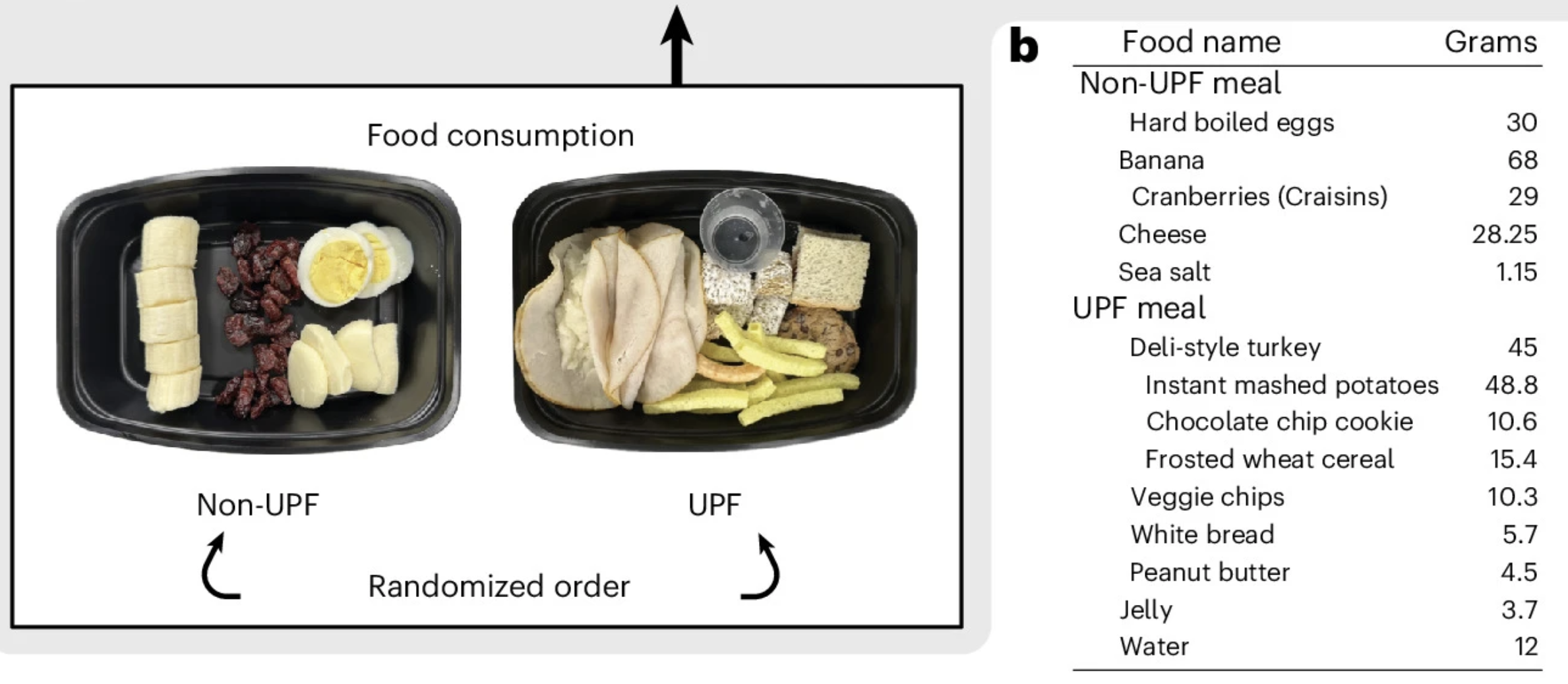
The “non-UPF” meal on the left and the ultraprocessed “UPF” on the right
3️⃣ Sugar-rich foods exacerbate antibiotic-induced microbiome disruption
September 30, 2026 · Nature
Super Simple Summary (What You Need to Know!): Patients who ate more sugar while on antibiotics lost more of their good gut bacteria. Eating simple sugars during antibiotics may make the damage to your gut much worse.
Overview: The team recorded every meal (9,419 in total) and collected daily stool samples from 173 hospitalized patients with blood cancers, many receiving antibiotics and stem cell transplants. Each additional 100 grams of sugar eaten in the 48 hours before treatment was linked to an extra 21% drop in gut bacterial diversity. Sugary diets combined with antibiotics were associated with blooms of Enterococcus faecium, a species tied to hard-to-treat infections. In mice given the antibiotic biapenem plus dietary sucrose, gut Enterococcus was 16.3 times higher by day 3 and 33.4 times higher by day 6 than without sugar.
Authors' Conclusions: Dietary sugar amplifies antibiotic-induced microbiome disruption, likely by fueling resistant bacteria that survive treatment. Limiting simple sugars around antibiotic courses could reduce microbiome damage, though the mechanism is unconfirmed and clinical trials are needed.
Why It Matters: It shows diet and medication interact at the level of the microbiome, making what we eat during a drug course a modifiable factor in protecting gut ecology and resilience.
📖 Read More:
4️⃣ Whole-grain consumption and cardiometabolic risk: a meta-analysis of randomized trials
September 15, 2026 · European Heart Journal
Super Simple Summary (What You Need to Know!): Across 87 trials, eating more whole grains improved weight, cholesterol, blood pressure, blood sugar and inflammation. About 60 to 100 grams per day looks like the sweet spot for heart health based on this study.
Casey’s editorial note: It’s important to note that American grain portion are GIGANTIC and distorted. If you actually look at what 60 grams of dry weight whole grains are, it’s a VERY small amount (it’s about ½ of cup of dry whole grain pasta or 1.5 slices of whole grain bread as the entire whole grain load for the day). I believe we are eating WAY too many grains in this country, but 60 grams is a fairly small amount, so you’re probably fine if you eat that amount. Make sure it’s organic.
Overview: This systematic review and dose-response meta-analysis pooled 87 randomized controlled trials with 6,529 participants from Asia, Europe, North and South America and Australia; most trials lasted about eight weeks. Benefits appeared at 30 to 40 grams of whole grains a day (dry weight), with the strongest effects generally at 60 to 100 grams a day. High-certainty evidence showed reductions in body weight, waist circumference, total cholesterol and the inflammatory marker IL-6. Moderate-certainty evidence supported improvements in LDL cholesterol, triglycerides, systolic blood pressure, fasting glucose and insulin resistance (HOMA-IR). Few trials tested intakes above 140 grams a day.
Authors' Conclusions: Whole grains improve cardiometabolic health through several modest improvements across multiple risk factors rather than one large effect. The findings support helping people reach the higher end of current intake targets. The trials measured risk factors, not heart attacks or strokes, so longer studies are needed.
Why It Matters: This study shows that a single whole-food swap can nudge insulin resistance, lipids, blood pressure and inflammation at the same time, a classic systems-level effect on cardiovascular risk.
August 27, 2026 · Cell Metabolism
Super Simple Summary (What You Need to Know!): People lost the same amount of weight on keto, Mediterranean or low-fat plant-based diets, but keto cleared more fat from the liver. What you eat while losing weight seemed to change how much metabolic health improved.
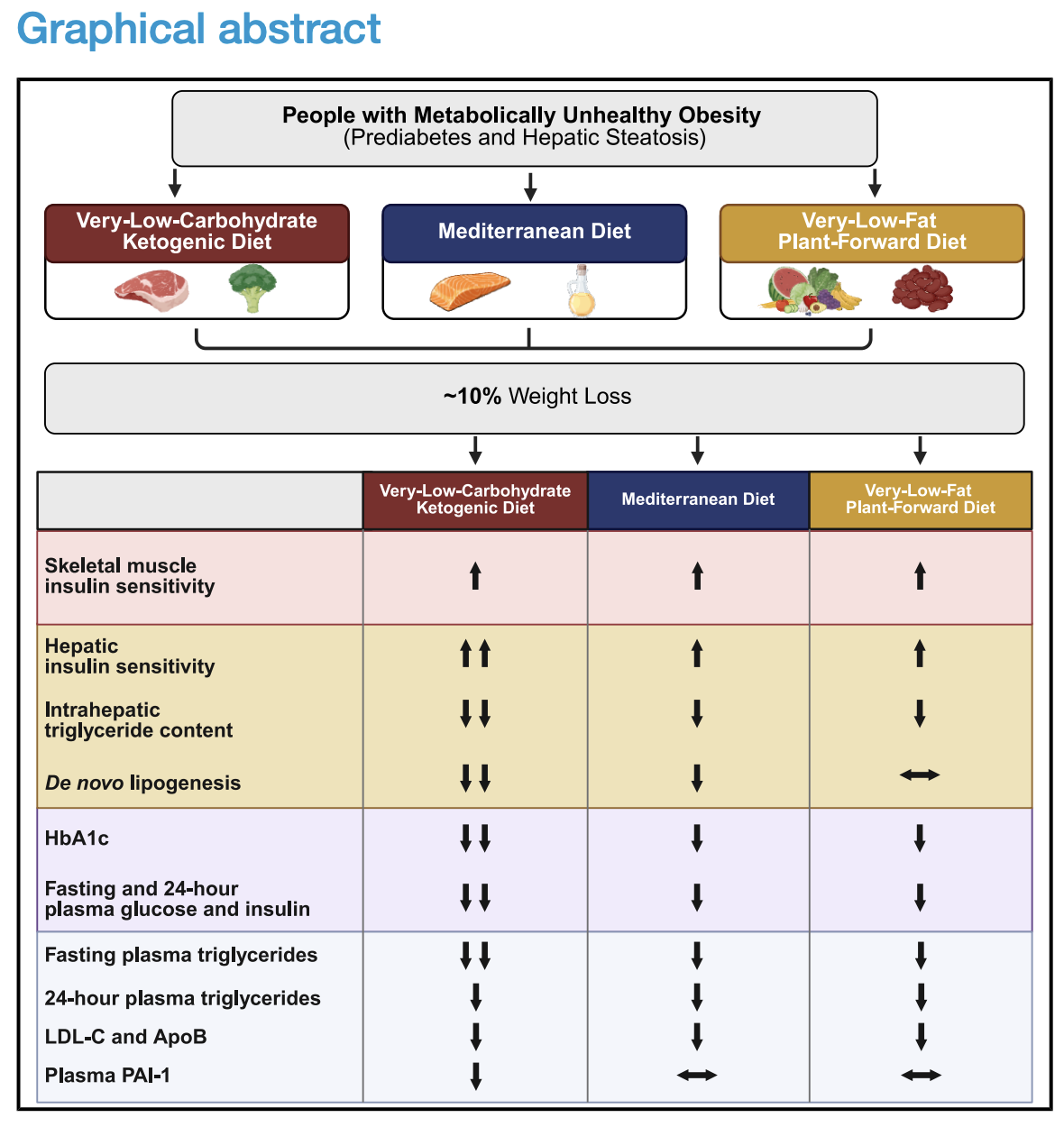
The graphical abstract showing that the largest improvements were seen in the very-low carbohydrate ketogenic group
Overview: Researchers randomized 42 adults with obesity, prediabetes and fatty liver disease to a ketogenic (4% carbohydrate, 73% fat), Mediterranean (50% carbohydrate, 35% fat) or low-fat plant-forward diet (70% carbohydrate, 15% fat). All food was provided, and calories were adjusted so every group lost about 10% of body weight over four to five months. All groups improved insulin sensitivity and body fat. Liver fat dropped 67% on average with keto versus 45% in the other groups. The keto group had the largest 24-hour rise in glucagon and drop in insulin, did not show increases in blood fats or cholesterol, and about 50% no longer met prediabetes criteria, compared with 29% (Mediterranean) and 7% (plant-forward).
Authors' Conclusions: A very low-carbohydrate diet may provide metabolic benefits beyond those from weight loss alone, particularly for people with high liver fat and prediabetes. The small sample and short follow-up limit generalization.
Why It Matters: It shows that diet composition, not just weight loss, shapes hormonal signaling and liver fat, which is central to reversing insulin resistance.
What did they feed the study participants? 👇️
The entrees of the very-low-carbohydrate ketogenic diet included but were not limited to: egg salad, omelet with bacon and sausage, almond flour French toast muffin, cheesy beef, pulled pork, Italian chicken with spinach, pecan-encrusted tilapia, salmon with cauliflower mash, pot roast, salmon with broccoli, and chicken with asparagus.
The entrees of the Mediterranean diet included but were not limited to: oatmeal with almonds and blueberries, vegetable breakfast hash, mixed berry smoothie, minestrone, spicy tilapia, salmon succotash, quinoa with black beans and corn, chicken pesto pasta, arancini, vegetable burger with roasted sweet potato, and vegetable flatbread.
The entrees of the very-low-fat plant-forward diet included but were not limited to: apple banana oatmeal, breakfast potato bake, fruit smoothie, red beans and rice, vegetable tortilla wrap, mixed grains with salmon, vegetable shepherd’s pie, sweet potato and black bean soup, and vegetable chili.
What the study participants were given to eat. My initial interpretation is that they focused on largely whole, low-processed foods in all three groups which is a plus of the study.
August 19, 2026 · Science Advances
Super Simple Summary (What You Need to Know!): Urolithin A, a compound gut bacteria make from pomegranates, walnuts and berries, helped stiff hearts relax better in animals and lab-grown human heart tissue.
Overview: Heart failure with preserved ejection fraction (HFpEF) occurs when the heart pumps normally but cannot relax and fill properly, and it has few effective treatments. The team tested urolithin A, a metabolite gut microbes produce from ellagitannins in foods like pomegranates, in animal models of HFpEF, isolated heart tissue and engineered human heart tissue grown from stem cells. Urolithin A activated the signaling protein PKGIα at a specific site (cysteine 42). In animal models, measures of heart function improved by up to 80% compared with untreated models, with better relaxation, less fibrosis and less enlargement of heart muscle cells. Engineered human heart tissue also relaxed significantly better.
Authors' Conclusions: Targeting PKGIα Cys42 with urolithin A attenuates cardiac dysfunction in HFpEF and may provide a basis for new treatments. Independent experts note the work is early-stage and human trials are needed; it does not support eating pomegranates to treat heart failure.
Why It Matters: It traces a path from food to gut microbes to a metabolite that acts on heart muscle signaling, a clear diet–microbiome–cardiovascular axis.
August 7, 2026 · The American Journal of Medicine
Super Simple Summary (What You Need to Know!): Men who got more of their calories from ultraprocessed foods had about a 30% higher risk of prostate cancer.
Overview: Using nationally representative NHANES data from 2003 to 2023, researchers analyzed 17,024 U.S. men aged 18 and older. Diet was estimated from two 24-hour recalls, and foods were classified with the NOVA system. Men were grouped into four levels of ultraprocessed intake, from under about 20% to over 44% of daily calories. Compared with the lowest group, the three higher groups had a 29% greater risk of prostate cancer. After adjusting for age, race and ethnicity, smoking and poverty, the increased risk ranged from 24% to 31%. The highest group showed a possible 34% increase that was not statistically significant, likely due to few cases.
Authors' Conclusions: Higher ultraprocessed food intake was significantly associated with greater risk of prostate cancer, adding to emerging evidence of harm. Larger observational studies and randomized trials are needed. Clinicians should help patients reduce ultraprocessed intake, and policy efforts are needed to address barriers to affordable healthy food.
Why It Matters: Like much data before it, this paper extends the ultraprocessed-food story from metabolic disease to cancer, pointing to diet quality as a shared upstream driver of chronic disease.
August 17, 2026 · Gastro Hep Advances
Super Simple Summary (What You Need to Know!): Adults who drank at least one sugary drink a day had more than double the risk of stomach cancer. Diet drinks didn't show the same link.
Overview: Researchers followed 112,284 participants in the Nurses' Health Study and the Health Professionals Follow-Up Study over several decades; 278 developed gastric cancer. Adults drinking at least one sugar-sweetened beverage daily had a 2.45-fold higher risk than those drinking fewer than one per month, after adjustment. In women in the Nurses' Health Study, more than one a day was linked to a 3.04-fold higher risk. Higher total fructose intake was also associated with more gastric cancer. Artificially sweetened beverages were not associated with higher risk after adjustment, and sugary drink intake was not linked to H. pylori infection in a subset of 940 people with available data.
Authors' Conclusions: This is the first study to show an association between sugar-sweetened beverages and gastric cancer in a U.S. population. Because it is observational, it cannot prove causation, and limited data on H. pylori and family history, plus a predominantly white sample, limit conclusions. Further research is needed.
Why It Matters: It adds stomach cancer to the list of diseases linked to liquid sugar, reinforcing sugary drinks as a high-leverage target for chronic disease prevention.
Why are the sugary drinks causing cancer? 👇️
“Several underlying mechanisms have been proposed, including weight gain, insulin resistance, steroid hormone imbalance, inflammation, DNA damage, and dysbiosis. However, the precise mechanism of carcinogenic effects of SSBs has yet to be investigated.”
9️⃣ Early-life sugar restriction causally reduces adult cancer incidence and slows biological aging
August 4, 2026 · Proceedings of the National Academy of Sciences
Super Simple Summary (What You Need to Know!): Babies born while Britain still rationed sugar had less cancer and slower aging 50+ years later. How much sugar you get in your first 1,000 days may shape your health for life.
Overview: The study used the abrupt end of UK sugar rationing in September 1953, after which sugar intake nearly doubled, as a natural experiment. Researchers analyzed 64,761 UK Biobank participants born from 1951 to 1956, measuring how much of each person's first 1,000 days (conception to age two) fell under rationing. Greater exposure was linked to dose-dependent reductions in adult cancer, with hazard ratios of 0.31 for liver and bile duct cancer, 0.48 prostate, 0.59 lung, 0.60 rectal and 0.64 breast. Rationing exposure was also linked to longer telomeres, about 2.2 fewer years of biological aging, and lower granzyme B, a marker of chronic immune activation. At midlife, those exposed ate less sugar and had healthier, more varied diets.
Authors' Conclusions: The findings provide causal evidence linking early-life sugar intake to adult cancer risk, acting through both a behavioral pathway (lifelong eating patterns) and a biological pathway (slower cellular aging and less immune activation).
Why It Matters: It shows nutrition in the earliest window of life programs metabolism, immunity and taste preferences for decades, making early sugar exposure a powerful lever for lifelong chronic disease prevention.
July 27, 2026 · Proceedings of the National Academy of Sciences
Super Simple Summary (What You Need to Know!): When gut bacteria don't get enough fiber, they start breaking down the protective mucus lining of your gut and make harmful compounds. Fiber and hard-to-digest plant proteins feed bacteria toward making helpful compounds instead.
Overview: Using stable-isotope labeling of dietary proteins in mice, researchers traced where gut-derived phenol metabolites come from. Harmful phenols such as p-cresol sulfate and phenol sulfate, made from the amino acid tyrosine, came mainly from bacteria breaking down the host's own proteins, including the gut's mucus lining. Beneficial phenols such as phenylpropionate and hippuric acid, made from phenylalanine, came almost entirely from digestion-resistant plant proteins that reach the colon intact. Fiber reduced mucus-lining breakdown and lowered harmful phenol production, while these resistant proteins increased beneficial phenol production.
Authors' Conclusions: Fiber and digestion-resistant plant proteins both shift microbial metabolism toward the beneficial metabolite profile associated with plant-based diets. The authors propose these “proteins imitating fiber” as an emerging class of nutrients that shape the microbiome and may influence metabolic health.
Why It Matters: It explains at a molecular level why plant-rich diets protect the gut barrier and help produce healthier circulating metabolites, the kind of uremic toxins and microbial signals that influence kidney, vascular and metabolic health.
📖 Read More:

RED FLAG STUDY - always read the funding sources
August 28, 2026 · British Journal of Nutrition
Super Simple Summary: This study claims that over two years, people trying to lose weight did about as well drinking diet soda as drinking water. For weight alone, swapping sugary drinks for diet drinks or water worked about equally. This study was industry funded (American Beverage Association and Coca Cola), and has SEVERE limitations, including that cholesterol, HbA1c and diastolic blood pressure were ALL worse with the diet sodas!
Overview: The SWITCH trial randomly assigned 493 adults with overweight or obesity in a structured behavioral weight-management program to drink either water or diet beverages sweetened with aspartame, acesulfame-K or sucralose daily for 104 weeks. After two years, the diet-drink group had lost about 4.8 kg and the water group about 3.7 kg, a difference that was not statistically significant. Both groups kept their weight off during the final year without program support, and both improved waist and hip circumference, body composition and several metabolic biomarkers. Blood pressure and cholesterol did not differ meaningfully between groups. The American Beverage Association funded the study; the authors report full control of analysis and reporting.
Authors' Conclusions: Non-nutritive sweetened beverages were comparable to water for long-term weight loss and maintenance, with no evidence that they disrupted appetite or caused long-term metabolic harm. The authors suggest the findings could inform WHO guidance, which currently advises against non-sugar sweeteners based mainly on observational data. Casey note: This absolutely should NOT inform WHO to be more permissive of non-nutritive (NNT) sweeteners, since several metabolic biomarkers got worse with diet drinks.
Limitations to this study:
Too many people dropped out. 55% left (only 220 of 493 finished), below the trial's own minimum of 248. The main analysis counted only the more motivated people who finished.
"No metabolic harm" goes further than the data. Cholesterol rose more with diet drinks, and HbA1c and blood pressure improved more with water! That’s a big deal. The trial never measured the microbiome, insulin sensitivity or glucose tolerance.
“Differences in biomarkers between the two groups included a significant increase in total cholesterol with NNS beverages compared with water and significant reductions in HbA1c and diastolic blood pressure with water.” ← It is wild
Year two was added midway through a protocol amendment, after recruitment fell short of target.
Adherence was mostly self-reported and open-label. The 98% compliance figure covers only the people who stayed.
Most participants already drank diet drinks. For them, being assigned to water meant giving up a habit, so the comparison wasn't clean.
The intensive weight program likely masked any beverage effect, since both groups got a full year of nutritionist support.
Narrow population. It was a single UK site, race and ethnicity weren't recorded, and people with diabetes were excluded.

Dr. Casey’s Monthly Q&A is a Steward-exclusive newsletter series that includes my in-depth, research-backed insights into the health questions on our community’s minds. The questions this month are amazing — thank you to the many Stewards who submitted them!
The next issue is coming this Thursday, October 15th. Become a Good Energy Steward to gain access and get it straight in your inbox.
Share with a friend: If you enjoyed this issue, please share with a friend! They can sign up for the newsletter here.