Newsletter #75: ⚡ 5 Sparks of inspiration to power your week
Inexpensive, easy ways to build metabolic health

Know someone who might enjoy this newsletter? Forward this email to a friend, or share the web version here: https://caseys-means.beehiiv.com/p/newsletter-75
Metabolic health isn't built on a single, massive life overhaul—it is created through small, accessible acts of daily care for your body, mind, relationship with nature, and community.
Every weekday morning, I send a Good Energy Spark to the Stewards community: a simple, achievable daily action—always free or low-cost—designed to spark inspiration and build momentum for a healthier life. Metabolic health and disease prevention are an intricate tapestry we weave each day, influenced by everything from sleep, food, and movement to mindset, toxin avoidance, and relational well-being. That is why these Sparks touch on all these pillars, offering actionable wins that take less than two minutes to read and usually less than ten minutes to complete, all backed by data and references.
Do I actually get the Spark done every day? Unfortunately, no—life gets complicated. But writing them, and seeing them land in my own inbox each day, keeps my head in the game and continually gives me fresh ideas for supporting well-being. So there’s no shame if you don’t do each one; let them sink in over time, so you always have a trove of ideas to draw from when you need them.
Enjoy these daily practices, and have an incredible week!
Dr. Casey
✨ Food Spark
Today, eat 100% organic—and see how affordable and easy a whole organic day can be.
❓️ Why: Eating organic meaningfully lowers your exposure to synthetic pesticides—in a study of 16 people across four families, switching to an all-organic diet cut the average level of the pesticides measured in their urine by about 60% within just six (!) days, with some individual compounds dropping as much as 95%. And it isn't only about what you avoid: a meta-analysis of 343 studies found organic crops have higher concentrations of several biologically important antioxidants and about half the cadmium (a toxic heavy metal), while organic milk and meat average roughly 50% more omega-3 fatty acids. Organic can feel expensive, but when you count what you actually eat in a day—not whole packages—a full organic day of three meals, a snack, and coffee can land right around $17.
💪 Commit: "Today, I am going to eat 100% organic for all three meals."
🛒 A full organic day, by the serving (approximate U.S. prices; a serving is your share of the package, not the whole thing):
🍳 Breakfast — Chia berry pudding, 2 eggs + coffee (~$5.85)
Organic chia seeds, 3 Tbsp (~$1.20 of a $15.99 bag / ~13 servings)
Organic canned coconut milk, ¼ can (~$0.65 of a $2.49 can) + water
Organic frozen mixed berries, ½ cup (~$1.25 of a $4.99 bag)
2 organic eggs (~$1.15 of a $6.99 dozen)
Organic pour-over coffee (~$1.60, about a tenth of a $15.99 bag)
🥗 Lunch — Kale & white bean salad (~$3.00)
Organic kale, ½ bunch, piled high (~$1.50 of a $2.99 bunch)
Organic canned beans, 1 can (~$1.49)
Organic tomato (~$2)
Olive oil, vinegar, and Dijon dressing (pantry staples—not counted)
🥩 Dinner — Grass-fed beef, broccoli & roasted sweet potato (~$5.00)
Organic grass-fed ground beef, 4 oz (~$2.25 of an $8.99/lb package)
Organic broccoli, ½ crown (~$1.50 of a $2.99 crown)
Organic sweet potato, 1 medium (~$1.25)
🍎 Snack (~$1.55)
One organic apple (~$1.00) with 1 Tbsp Nutzo nut-and-seed butter (~$0.55 of a $12.99 jar)
Day's total: about $17—a full day of 100% organic eating (three meals, a snack, and coffee), with the rest of each package ready for tomorrow.
💡 A few notes:
Buying the whole package costs more up front, but the per-serving cost is what you actually "spend" per day—and the leftovers stretch across the week
Frozen organic fruits and vegetables; bulk nuts, seeds, beans, and legumes; and dried/canned organic foods are often the cheapest way to eat organic
Forming a relationship with local farmers is also a way to find deals on organic produce at the farmer’s market
📖 Learn more:
✨ Movement Spark
Put on a favorite song and dance for 3 minutes today.
❓️ Why: Dancing is movement, music, connection, and joy all at once—and it's extremely good for the brain. In a long-term study published in the New England Journal of Medicine (a top journal), dancing was the one physical activity associated with a lower risk of dementia, likely because it pairs physical activity with rhythm, memory, and coordination. In that study, dancing was actually the most protective activity of all activities assessed, with a ~76% lower risk of developing dementia compared with people who danced rarely. (Note, playing board games was also extremely significant in reducing risk!). In my experience, dancing is also an incredible mood booster!
💪 Commit: "Today, I am going to put on a song I love and dance for 3 minutes."
💃 How to do it:
Pick a song that makes you feel something—headphones or speaker, whatever's handy. My family’s go-to: Higher Love by Kygo with a fun $10 party light from Amazon! 😆
Dance in the kitchen, the living room, or the car (parked!). If you are feeling really self-conscious, go into a bathroom or bedroom, lock the door, turn the lights off, and just move!!!
Pull in your kids, partner, or roommate!
💡 A few notes:
Skill is irrelevant!! This is about moving and feeling good, not performing
It's cardio, coordination, and a mood lift in one, in less time than a song
Make it a habit: one song while the coffee brews, when you’re upset or triggered, or to shake off a stressful afternoon
📖 Learn more:
✨ Community Spark
Try all four pillars of Dr. Dean Ornish's lifestyle program in a single day: Eat well, Move more, Stress less, Love more.
❓️ Why: For decades, cardiologist Dean Ornish has shown that intensive lifestyle change can do what we're often told only medication can. A randomized trial found his program reversed coronary heart disease, and a 2024 randomized trial found it improved cognition and function in people with early Alzheimer's disease. When I was in medical school, the prevailing dogma was that cardiac plaques and dementia could not be reversed, but that’s false, and more and more research each year is showing this. Dr. Ornish’s whole approach rests on four simple pillars, and today's spark is to learn about them and try to touch all four today.
💪 Commit: "Today, I am going to hit all four of Dr. Ornish's pillars: eat well, move, manage stress, and connect with someone I love."
The four pillars—do a little of each:
🥗 Eat well. Build your meals around whole, plant-forward foods—vegetables, fruit, beans, legumes, and many other delicious whole foods—and keep ultraprocessed food to zero.
🏃 Move. About 30 minutes of moderate activity, like a brisk walk. The Ornish Program prescribes aerobic exercise a minimum of three hours per week and total body strength training at least twice per week.
🧘 Manage stress. The Ornish Lifestyle Medicine program recommends at least one hour a day of stress management using five yogic practices: gentle yoga postures, breathing exercises, relaxation, meditation, and positive imagery (read more here). For today, try at least a few minutes of a stress-reducing practice—yoga, meditation, or a few minutes of slow breathing.
❤️ Love, support, and connect. Strong social connection is associated with longer life and better health, so make it concrete: today, eat a meal with a friend, take a walk with someone you love, or even write a letter of love and gratitude—research suggests that simply writing about affection for a significant other, even without sending it, may lower LDL cholesterol.
💡 A note: The Ornish program is primarily plant-based; for context, other dietary approaches—including Mediterranean, MIND, and ketogenic diets—are also being studied for cardiovascular and brain health, with varying levels of evidence.
📖 Learn more:
✨ Nature Spark
Eat at least one meal outside today—even if just for 10 minutes.
❓️ Why: The average American spends about 93% of their time indoors (😭😭😭) , which means we rarely get the daylight and fresh air our bodies are built around. Even a short dose of nature measurably lowers the stress hormone cortisol, and sunlight on your skin triggers production of vitamin D—a hormone that helps regulate insulin sensitivity and immune function.
💪 Commit: "Today, I am going to eat at least one meal outside and eat it in the fresh air for 10 minutes or more."
Easy ways to do it:
Take breakfast, lunch, or your coffee to a porch, balcony, stoop, or backyard
Eat in a nearby park, on a bench, or in a courtyard at work
Turn it into a quick picnic with family or a coworker
No outdoor space? Eat by a wide-open window with the sun coming in.
💡 Make it count:
Leave your phone inside (or at least tucked away in a bag) and just notice the light, air, and sounds.
Get some sun on your skin and face—a few unhurried minutes.
Pair it with a short walk afterward to add in a little movement.
📖 Learn more:
Good Energy — see the section on Vitamin D as a hormone made from sunlight (p. ~88)
A 20-minute "nature pill" significantly lowers cortisol (Frontiers in Psychology, 2019)
How much time Americans spend indoors — the NHAPS data (2001)
✨ Spirituality Spark
Live by the Four Agreements today.
❓️ Why: So much of our daily stress comes not from what happens, but from the stories we build around it—harsh words, assuming the worst, or taking things personally. Don Miguel Ruiz's book The Four Agreements distills freedom from that noise into four simple principles. Two of them—not taking things personally and not making assumptions—are also a form of cognitive reappraisal, one of the most effective ways we can regulate our emotions.
💪 Commit: "Today, I am going to practice the Four Agreements."
🕊️ The four agreements:
Be impeccable with your word. Speak with honesty and kindness—about others and about yourself. Use words to build up rather than tear down. Do not gossip.
Don't take anything personally. Other people’s reactions are shaped by their own experiences, so listen for what may be true, take responsibility when you’ve caused harm, but don’t turn criticism into a verdict on your worth.
Don't make assumptions. Ask questions and say what you mean; much conflict grows from things left unspoken and guessed at.
Always do your best. Your best will look different on a tired day than an easeful one—so give the best you can, without harsh self-judgment.
💡 How to practice today:
Pick the one agreement that's hardest for you and put special attention there
Before reacting to a text or comment, check whether you're assuming something you could simply ask about (this is key!!!!)
Don’t carry what is not yours to hold
📖 Learn more:
P.S. If you’d like a little dose of Good Energy delivered straight to your inbox each weekday, come join our Stewards community here.
Building lasting, whole-person health isn’t about overhaul—it’s about those simple, consistent daily wins. Alongside your weekday Sparks, you’ll also get a monthly Q&A with Dr. Casey, our “Poem of the Month” to broaden your perspective, a Metabolic Research Roundup breaking down the latest science on a single focused topic, and access to a vibrant community of people on the exact same path. Together, it’s everything you need to thoughtfully care for your body, mind, and spirit—one achievable step at a time.

Dr. Casey’s Monthly Q&A is a Steward-exclusive newsletter series that includes my in-depth, research-backed insights into the health questions on our community’s minds. The questions this month are amazing — thank you to the many Stewards who submitted them!
The next issue is coming this Thursday, September 17th. Become a Good Energy Steward to gain access and get it straight in your inbox.
My dear friend Dr. Will Cole’s new book, Heal Your Cells, is out now!
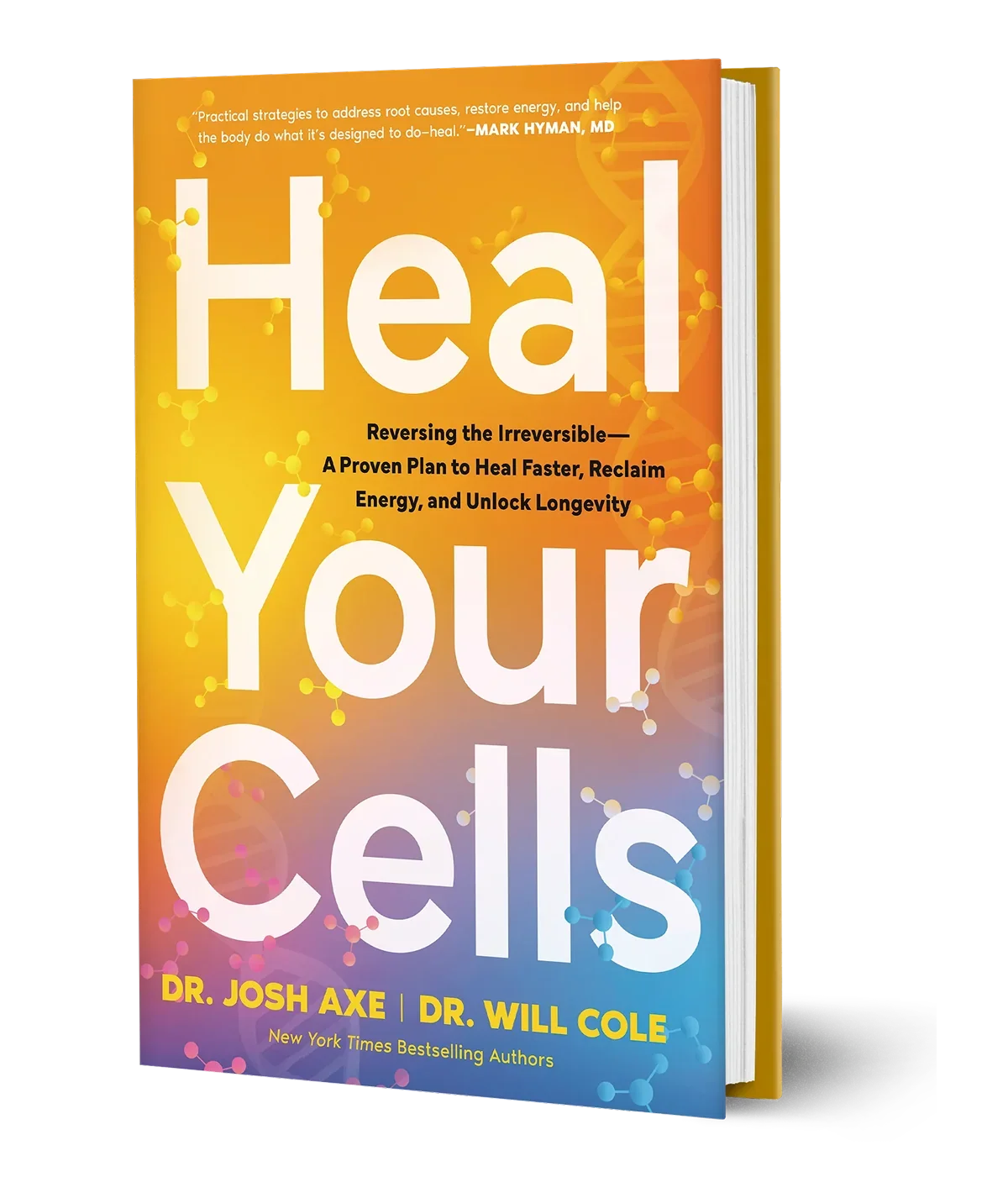
Heal Your Cells is a science-backed guide to reverse chronic symptoms and slow aging by restoring your body’s most powerful healing force: your cells.
Functional medicine experts and bestselling authors Dr. Josh Axe and Dr. Will Cole reveal how cellular degeneration is the true driver of aging and chronic illness. Symptoms like fatigue, insulin resistance, brain fog, gut issues, and hormonal imbalance are early warning signs that your cells aren’t functioning as they should.
Share with a friend: If you enjoyed this issue, please share with a friend! They can sign up for the newsletter here.