Newsletter #64: 👁️ What did you see today?
The medicine of paying attention

🎧️ Want to listen to this newsletter, personally read by Dr. Casey? Become a Good Energy Steward here.
I first learned about the Kogi, an Indigenous community from Colombia, through the breathtaking documentary Aluna: An Ecological Warning by the Kogi People (a must-watch, free on YouTube). The film presents the Earth as a living, interconnected system, where disrupting natural water flows—through dams, drained wetlands, or diverted waterways—creates ripple effects throughout the entire ecosystem, including impacting the weather on the mountaintops. I couldn't help thinking about the human body, where disrupting any type of circulation—vascular, lymphatic, or glymphatic flow—directly leads to diseases all over the body ranging from heart attacks to blindness to dementia. The Kogi believe that the health of the Earth and the health of people are inseparable, and that our own aliveness depends on living in deep relationship with—and helping sustain—the aliveness of the Earth.
More recently, I read a book about the Kogi called A Book of Balance: Kogi Wisdom for a Good Life and Thriving Earth, by Lucas Buchholz, where each chapter title is a question to ponder as we consider how to evolve toward becoming protectors of life on Earth (which includes being protectors of human health).
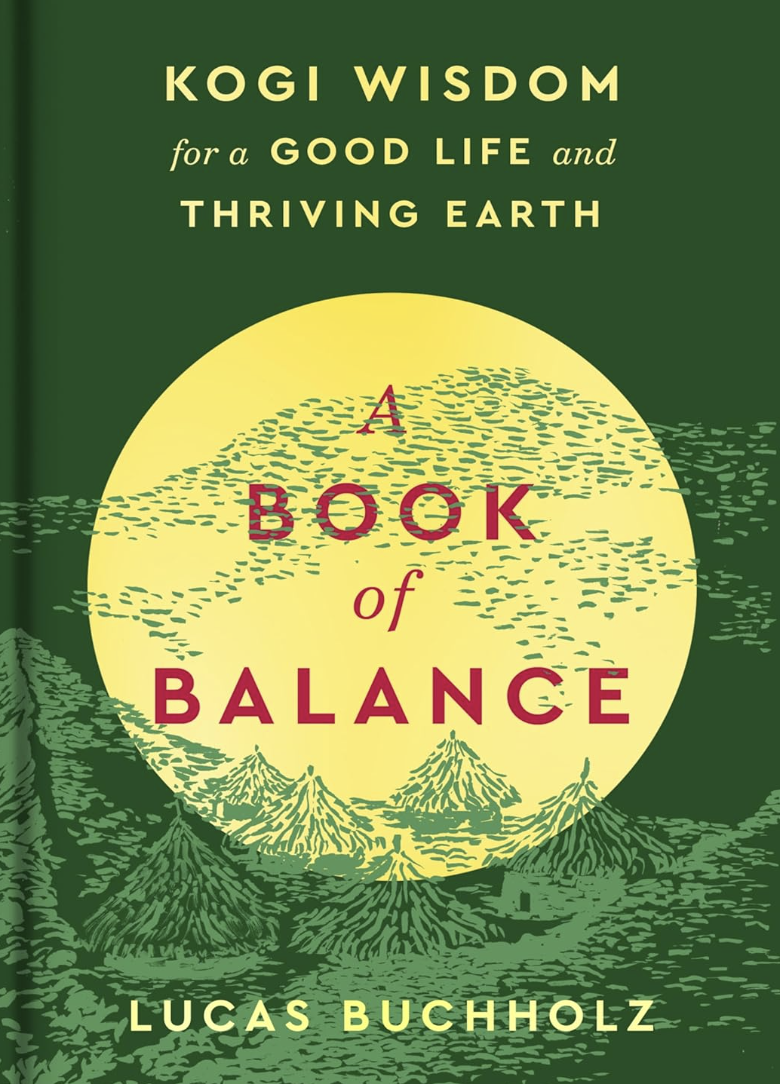
The book’s first chapter is called, “What did you see today?”
Such a simple question, but it has permanently changed me, and I offer this newsletter in hopes it may positively impact your health journey, too.
In an era when we spend the vast majority of our lives sedentary and indoors (90% or more of our time), under artificial light and looking at screens for more than seven hours each day, we can easily go an entire day without stopping to experience genuine wonder—to truly SEE the miraculous living world around us.
The Kogi believe this is a problem. A big problem. For our health, the planet, and the spirit. In fact, they view Westerners as “practically dead.”
The author asks:
“Why has the essence of life, or in other terms, the animating vital energy of existence or life force, been largely lost in our thinking?... It is not just about feeling alive, it is about stepping into dialogue with the aliveness of everything, especially the Earth. The Kogi often told me, bluntly, that by observing our way of life, they perceive us as practically dead.”
He continues:
“When was the last time you could honestly say you felt fully alive, fully in tune and in balance with the world around you? That you spent time in pure awareness of the natural world, without activating your analytical mind, simply observing the details and inspiring qualities of nature? That you allowed yourself to be submerged by the miraculous sensations of being alive?”
You might be thinking: “I’m here for the health tips! Blood sugar, metabolism!”
But this is completely related.
Our health journeys are, at their essence, a pursuit of greater aliveness.
We want to feel more alive, live longer, and avoid disease and premature death.
And the Kogi's message is this: by not taking intentional time each day to experience and be a part of the inspiring qualities of nature, we step out of dialogue with the aliveness of everything. Which includes the aliveness of ourselves.
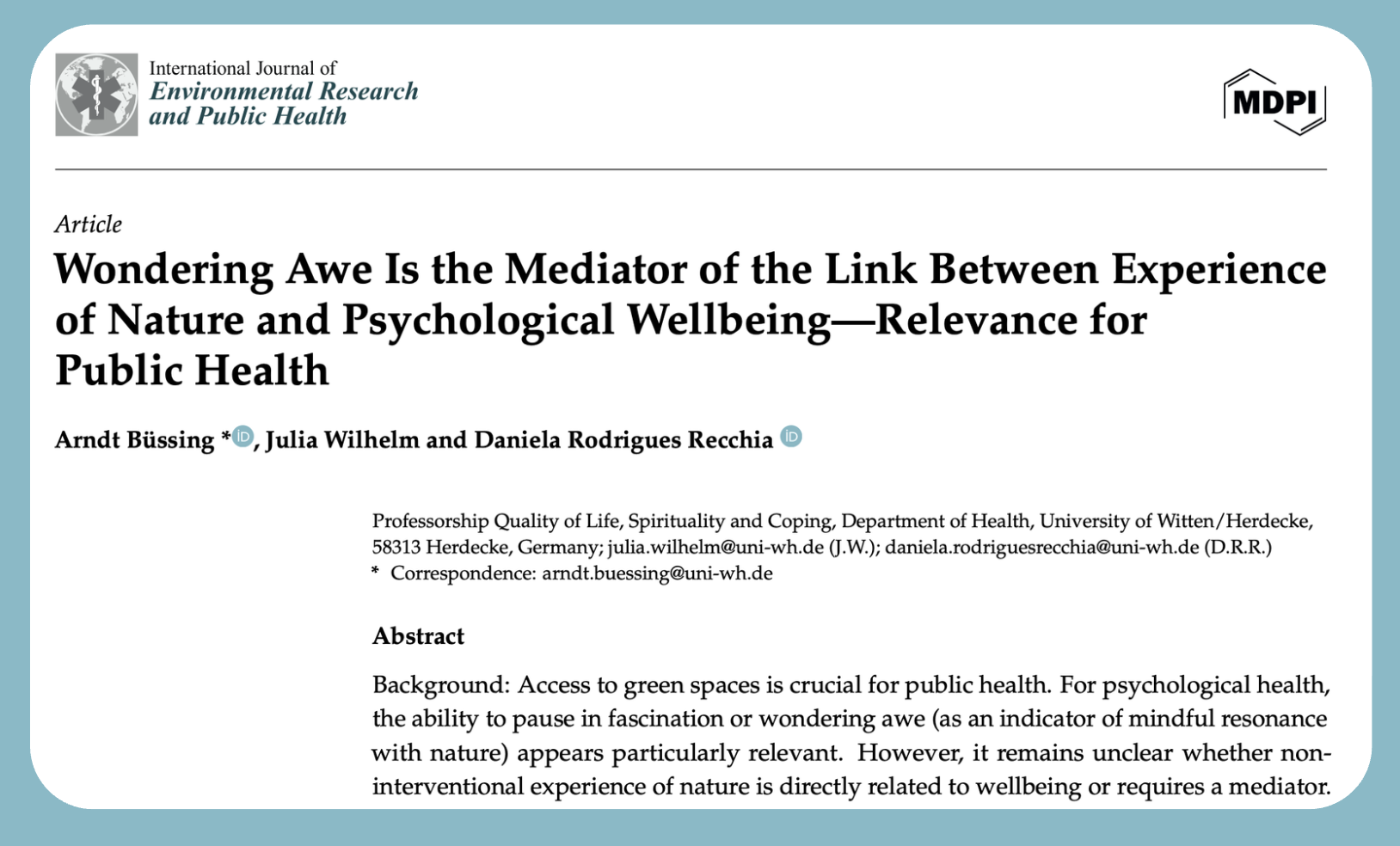
What a cool paper! 🧪
Interestingly, science supports this. A 2025 study, Wondering Awe Is the Mediator of the Link Between Experience of Nature and Psychological Wellbeing, found that awe and gratitude are the primary psychological mediators linking nature exposure to wellbeing. This is one of the first studies to show the mechanistic link between being outdoors and increased wellbeing. That link is awe. They suggest that fostering nature contact in such a way that it specifically evokes awe could serve as a meaningful, low-cost public health strategy. The authors define wondering awe as “a reaction towards specific situations or emotionally touching experiences” characterized by connectedness, altered time perception, perceived vastness, physical sensations, and gratitude.
The Kogi spend their evenings gathered around a fire in a dark sacred hut called a nuhué, contemplating questions like, “What did you see today?” Inside the hut, the perception of time is said to become “like a spiral,” creating “a sense of many worlds existing at the same moment.”
And to be clear, the question is not: what did you see today, as in, “I saw an Excel spreadsheet, a billboard for Michelob Light, and a funny reel.”
The question is: what did you SEE today.
Capital-S SEE— meaning, seeing from the most whole, present version of ourselves. Seeing from the part of each of us that so desperately wants to plug into the aliveness of everything in a world of hurrying and fear that does not incentivize that.
The question lodged itself in my mind, and over the following weeks I found that, almost without trying, one thing in nature each day would catch my attention. A pattern hidden inside a green pepper. A tree growing fluffy purple flowers right off its trunk. The repeating geometry inside a cauliflower. A barn owl staring me in the face. These are all natural phenomena that had always been there, but that I had somehow missed before I set the intention to SEE. Each one stopped me in my tracks, a “wink from God” telling me that the question - What did you see today - was important.
Why do we care about blood sugar, cholesterol, or inflammatory markers in an optimal range? Because they're a window into something deeper: how well a living system — our living system — is functioning. We spend a huge effort optimizing biomarkers because we hope they'll lead to something much bigger—a long, joyful, meaningful life. But often, that bigger goal remains elusive, no matter what our fasting glucose levels are.
Mitochondria transform sunlight captured by plants into the energy that powers every heartbeat, every thought, every breath we take. The same pesticides, herbicides, and pollutants that damage ecosystems often impair mitochondrial function in humans—we know this. The same recurring geometries that shape the natural world—spirals in palm fronds and shells, and fractal-like branching in cauliflower, and the ever-present Fibonacci sequence—also appear throughout our own bodies, from the branching architecture of our lungs to the spiral cochlea of the inner ear and the helical structure of DNA. We are expressions of consistent cosmic patterns, and I believe that an awareness of this reality can not only motivate us on our health journeys, but also help move us from simply achieving optimal lab values to truly embodying the thriving, connected life we so deeply desire — the real goal.
I've started keeping a little album on my phone called “What did you see today?” … a visual living gratitude journal. It's become one of my favorite delights—not because I think seeing a barn owl will lower my blood sugar, reverse mitochondrial dysfunction, or help me lose the baby weight, but because it represents an intention to truly engage with the unbelievable aliveness of our planet as the foundation for my own pursuit of greater aliveness.
It also strikes me that we are unlikely to protect what we don't notice. Attention deepens appreciation, appreciation creates relationship, and relationship naturally inspires stewardship. Perhaps that is why the Kogi begin not with policy or activism, but with a question as simple as, What did you see today?
Perhaps that intention can reshape—and reinspire—a new way of seeing our health journeys. We are not simply trying to avoid disease. We are trying to become more fully alive.
With gratitude,
Dr. Casey
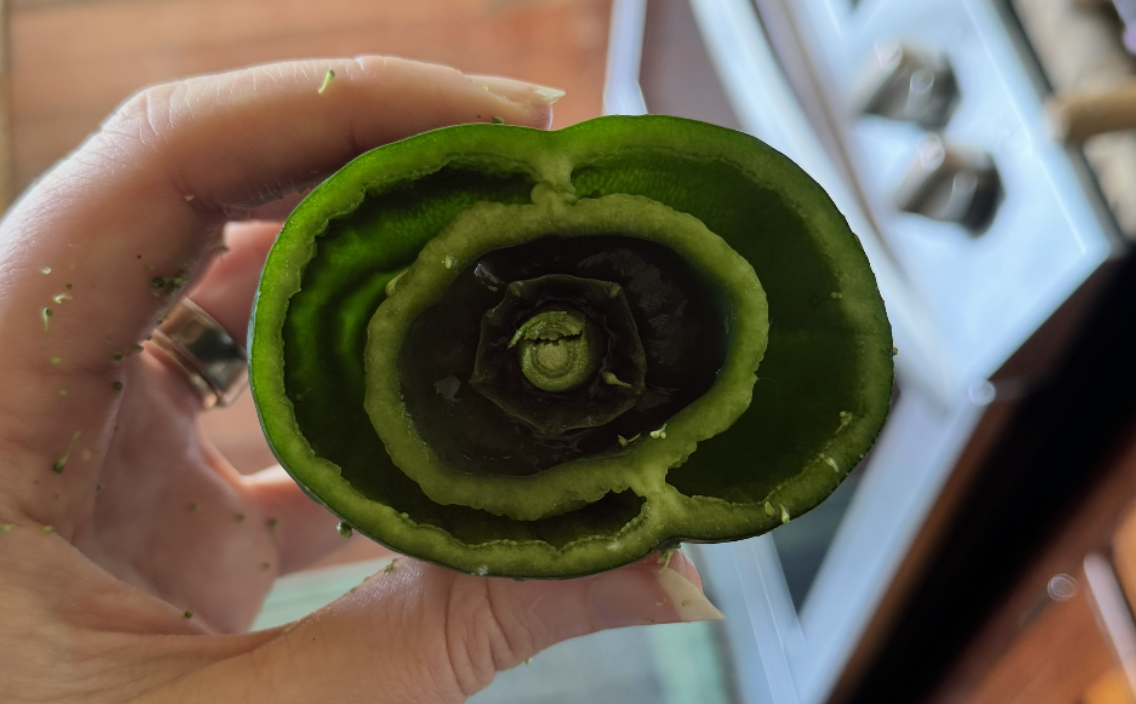
A concentric circle within a green pepper 🎯
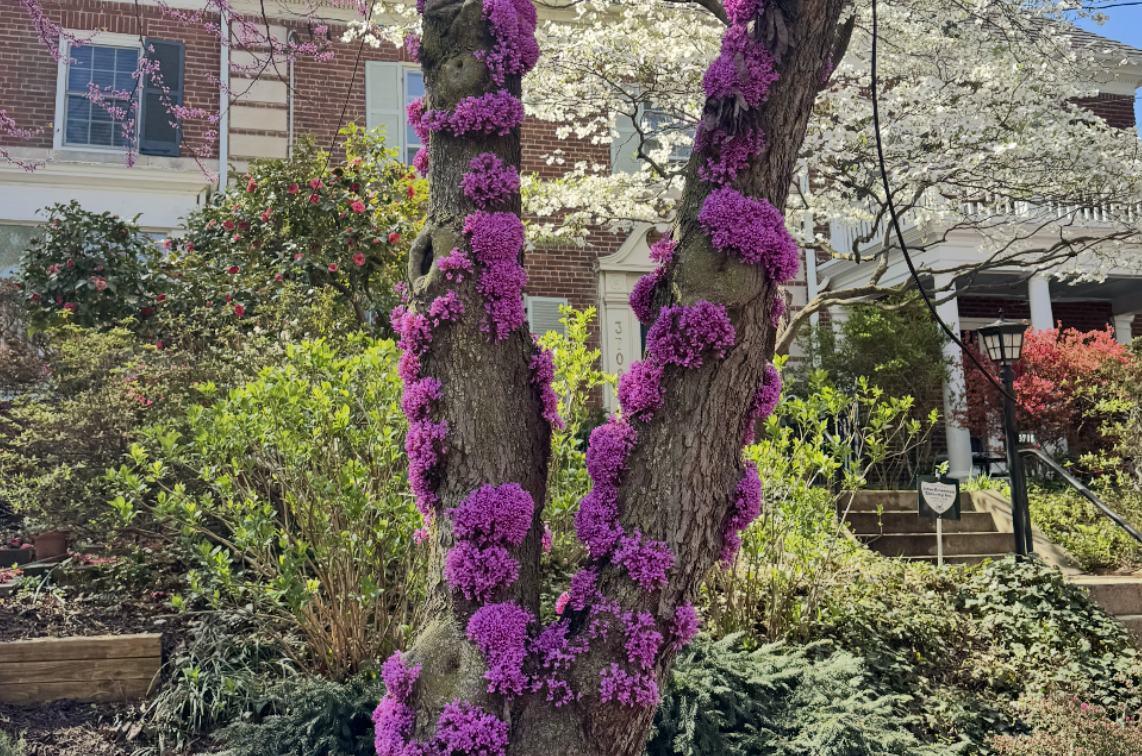
This gorgeous tree is an Eastern Redbud, where the flowers bloom directly from the trunk and branches, a rare phenomenon known as cauliflory 🌸
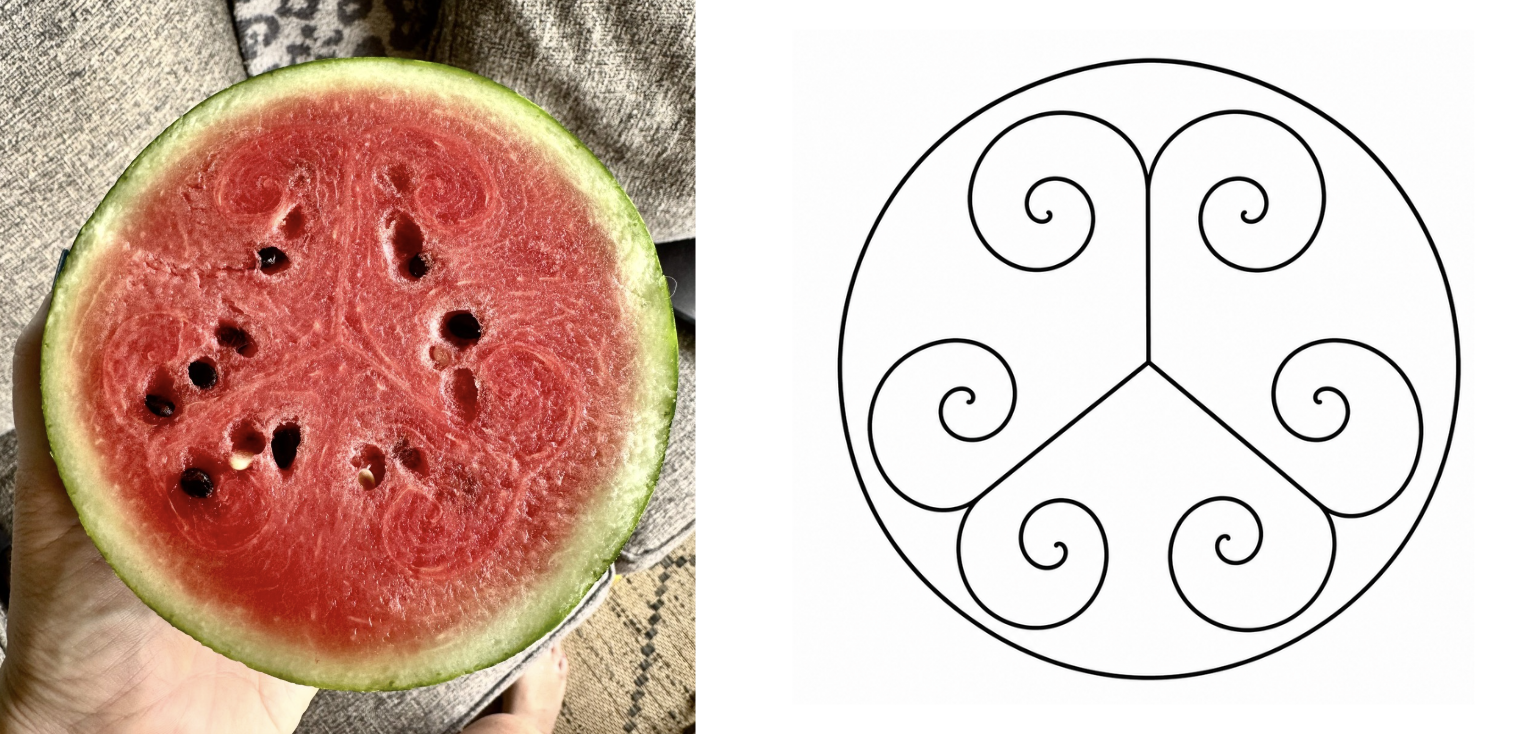
When I sliced into a watermelon, I was SHOCKED to find a pattern reminiscent of the ancient Celtic triskele—a three-armed spiral motif that has symbolized life's interconnectedness for thousands of years. Look closely at the watermelon - the pattern is incredible! 🌀
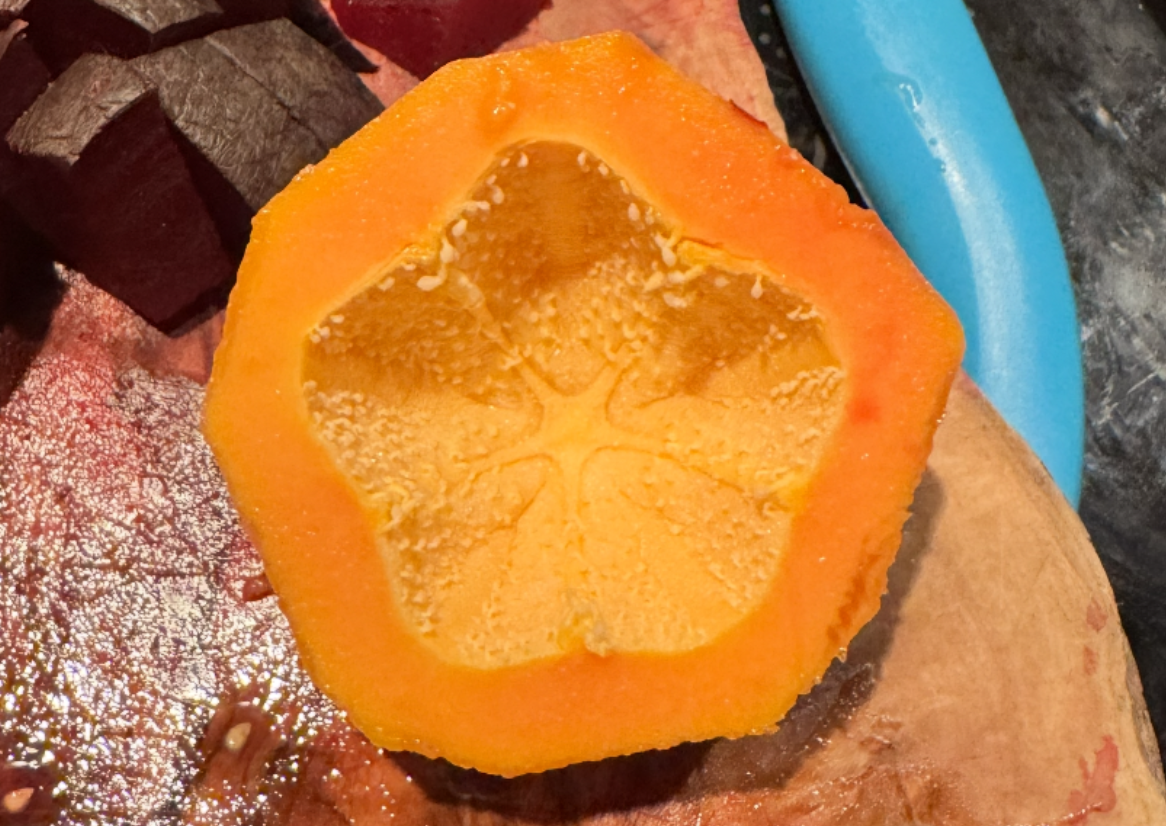
A pentagonal star when I cut a papaya open! 🌟
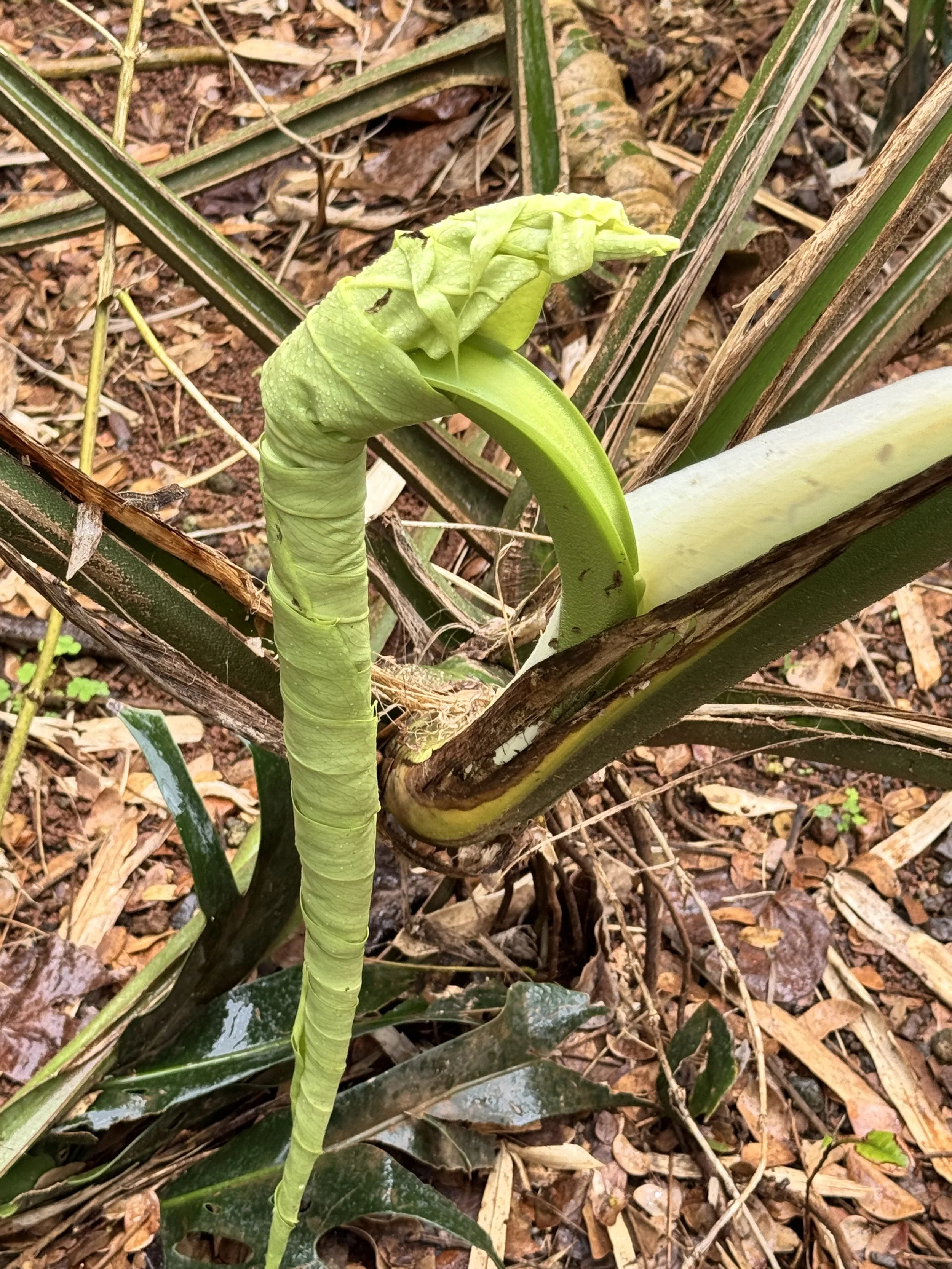
A Monstera plant unfurling a new leaf, which almost looks like a fabric sheath. Watch here for a timelapse of this 18 day process! 🌿
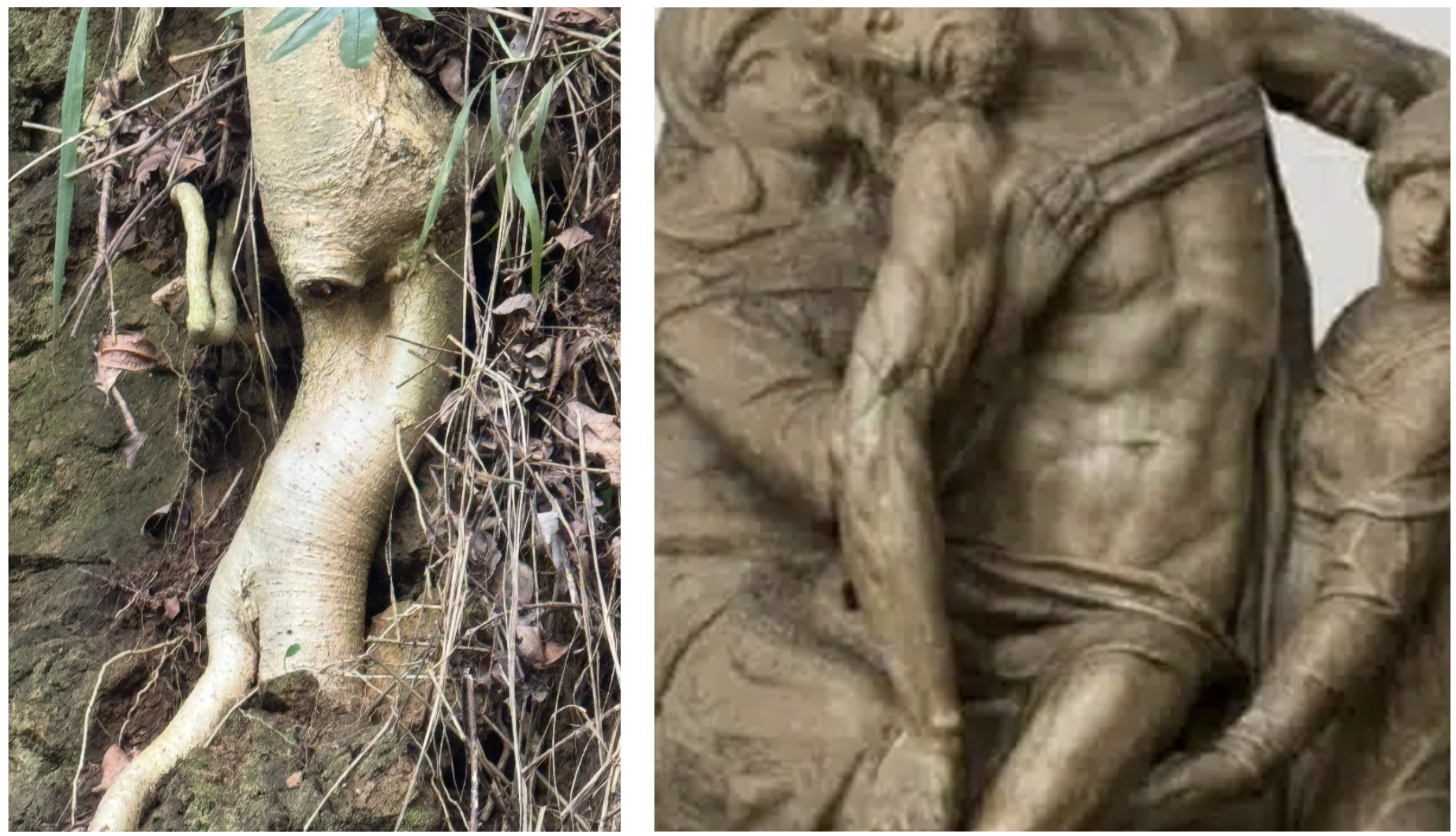
This tree root on a walk (left) looked so much like the Pietà Bandini and other sculptures by Michelangelo 👨🎨
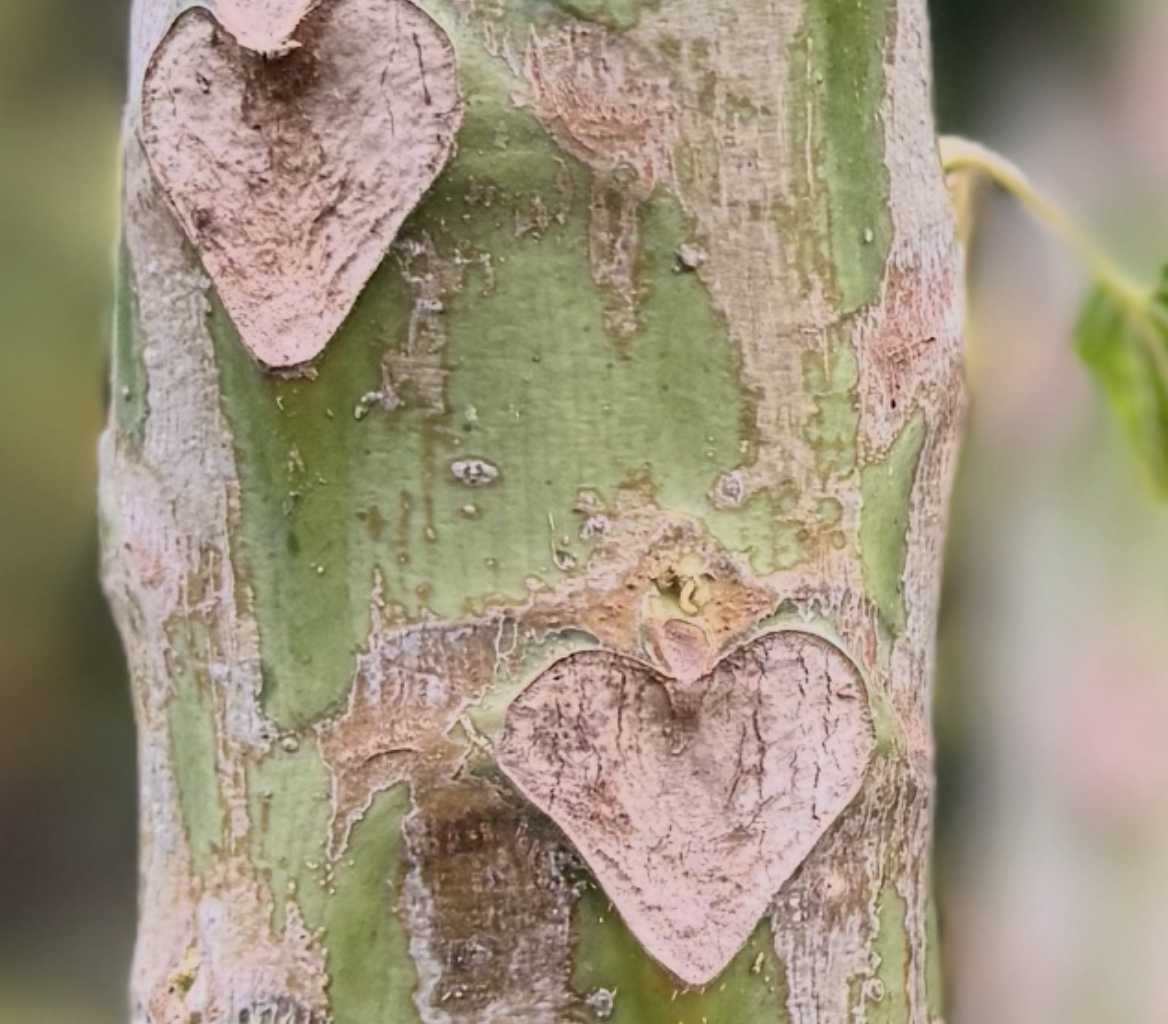
After a papaya tree drops its fruit, it leaves a heart shape on the trunk ❤️
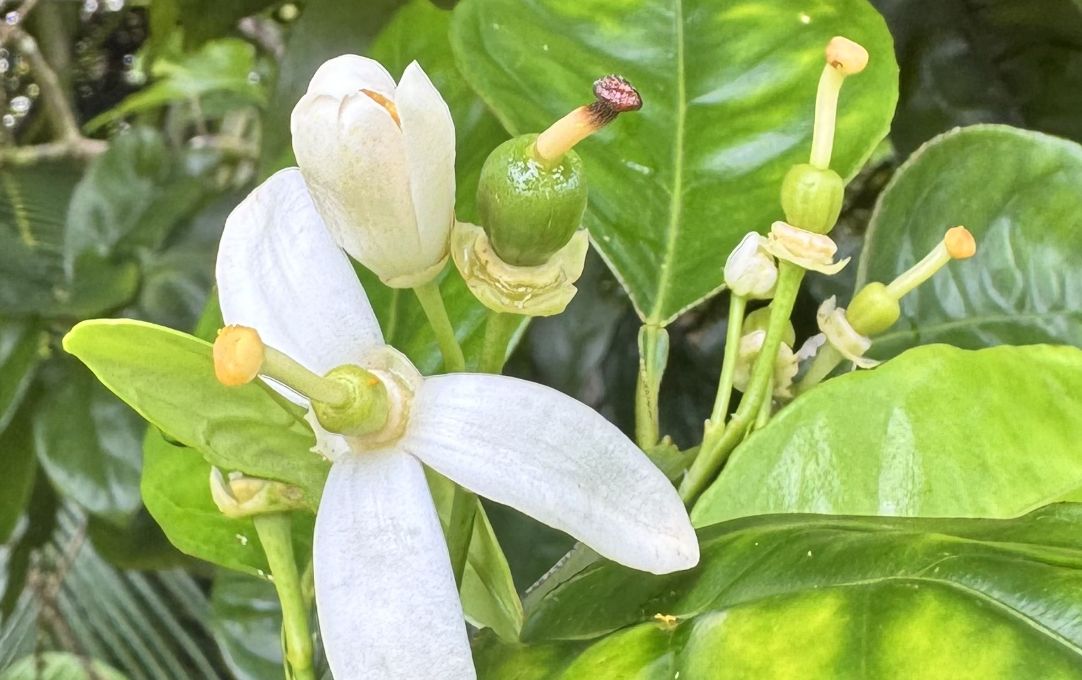
Did you know this is how oranges grow?! Once an orange blossom is successfully pollinated (usually by bees), the petals begin to wither and fall away. What remains is the ovary of the flower—the small green sphere you're seeing in the center. That ovary begins to enlarge through fruit set, when the plant shifts from making a flower to growing a fruit. 🍊
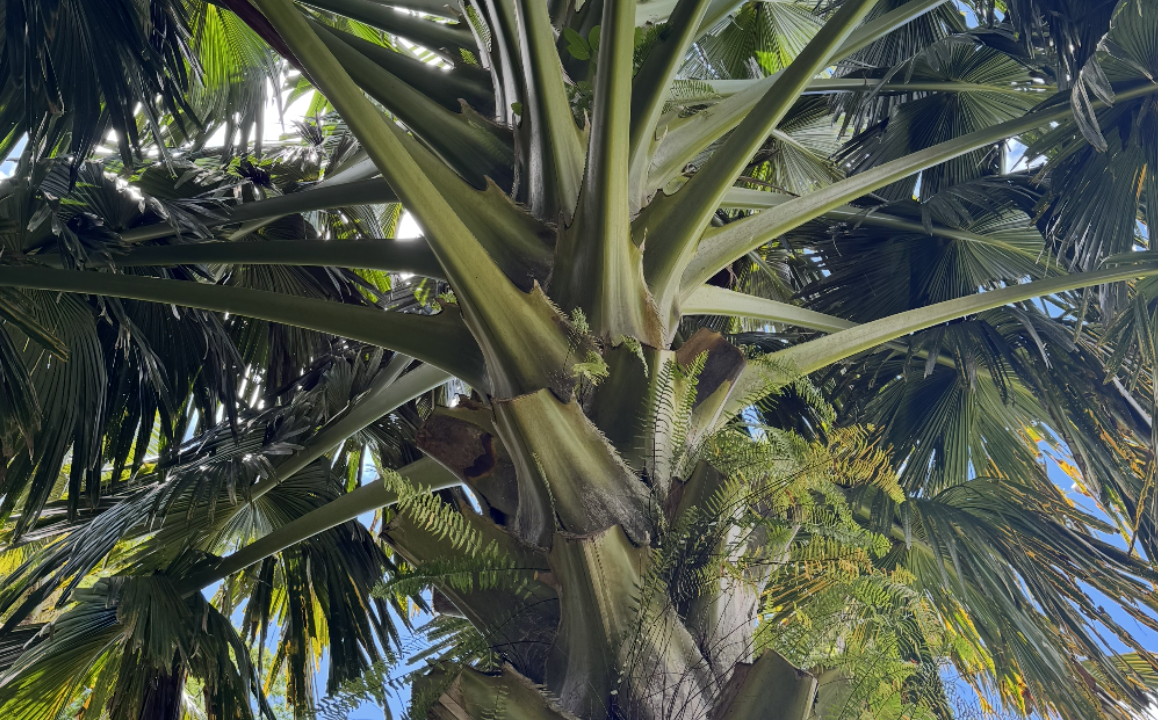
Palm fronds grow in a spiral! This reminded me of the documentary Inner Worlds, Outer Worlds, which one of my kind readers shared with me (thank you!). The film explores the omnipresence of spirals throughout nature and the cosmos, from cells to galaxies. Spiral phyllotaxis is the geometric arrangement of leaves around a plant's stem, where each new leaf emerges at a nearly constant angle, creating a spiral pattern. In palms, this arrangement helps optimize light exposure and minimize self-shading, often reflecting the mathematical principles of the Fibonacci sequence. 🌴🌀
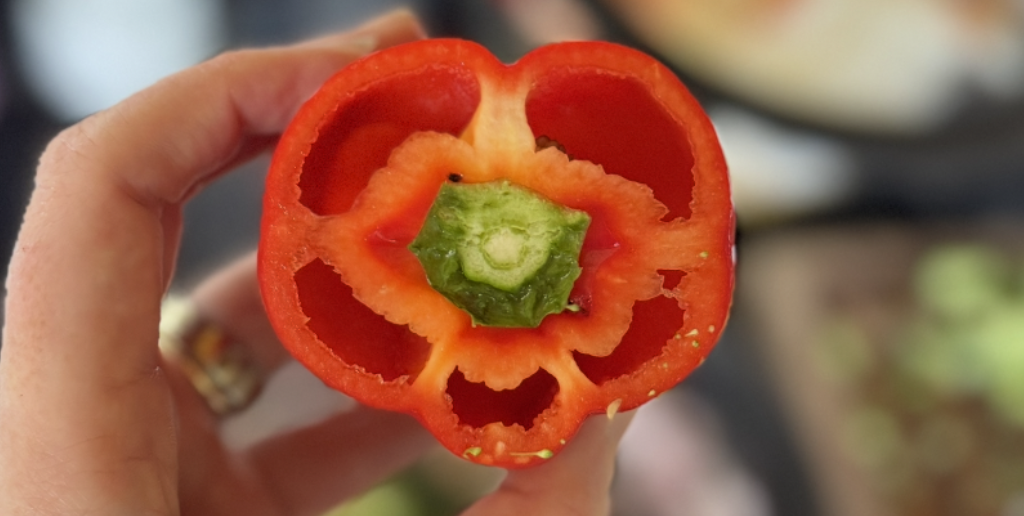
A star inside my pepper 🌟
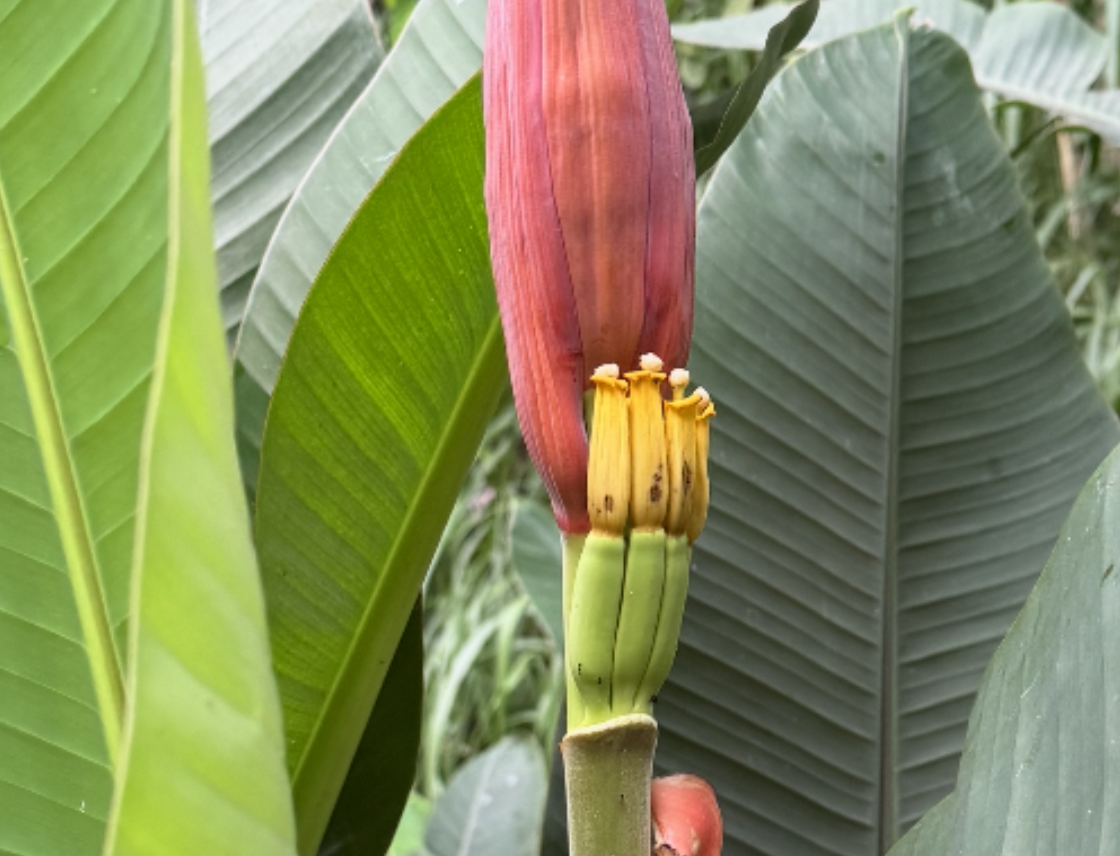
I have eaten so many bananas in my life, and never realized this is how they grow! The crimson banana flower slowly peels back layer by layer, revealing rows of female flowers beneath. Those tiny green forms with yellow tips are the very first bananas, already beginning their transformation from flower to fruit. 🍌
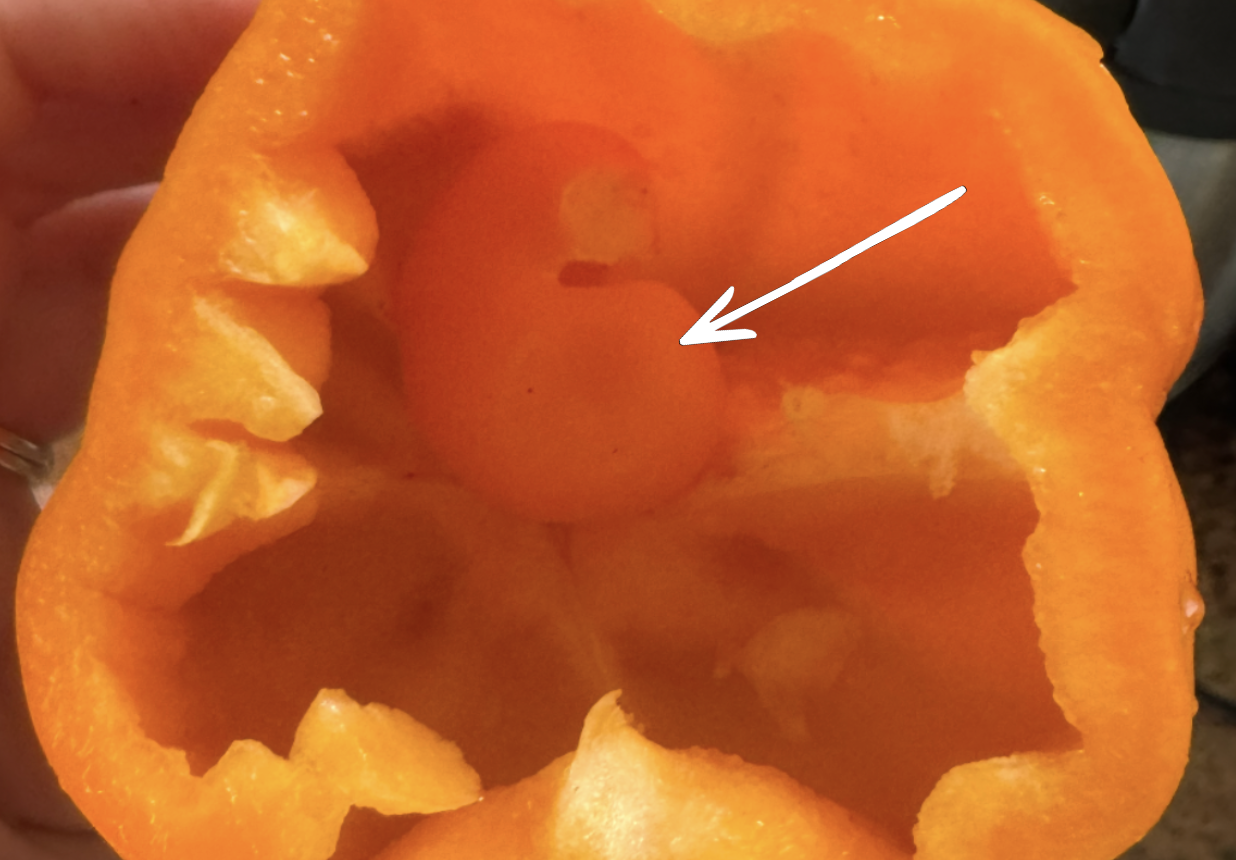
This "baby pepper" inside the pepper is called internal proliferation, a harmless developmental quirk in which the pepper begins growing a second fruit inside itself. 🐣
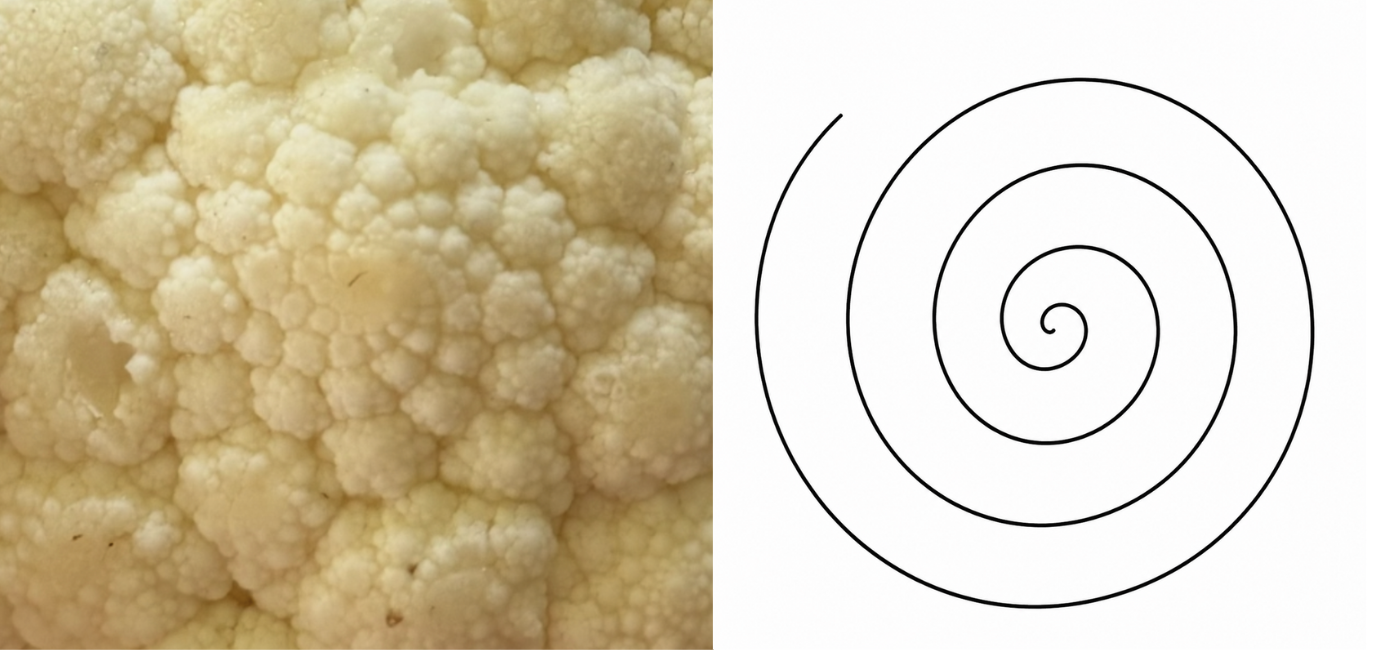
The repeating pattern of cauliflower is an example of fractal geometry 🥦
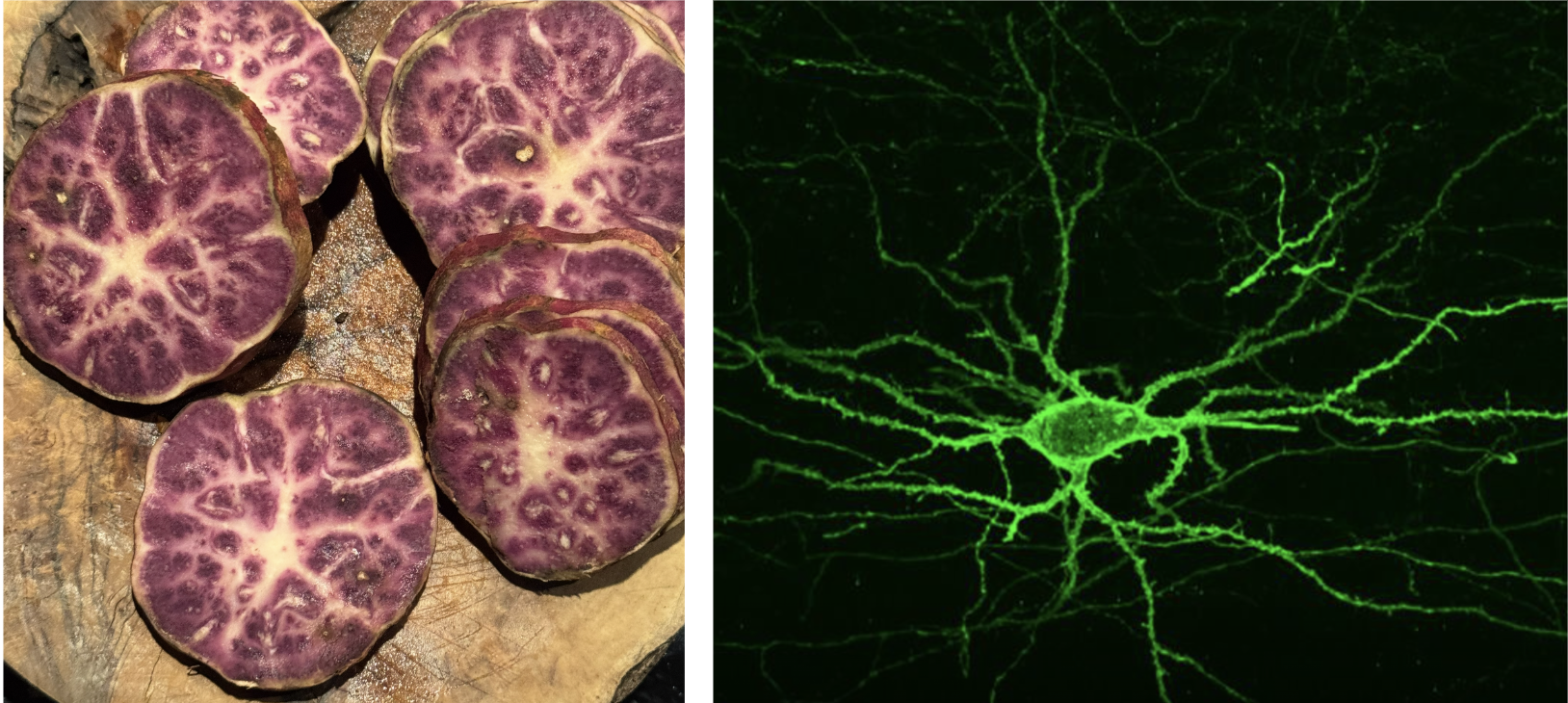
The intricate starburst inside this purple sweet potato is (I think) created by its vascular tissue—the network that transports water and sugars throughout the root. The patterns looks like a neuron! Neuron image source: McGovern Institute 🍠 🧠
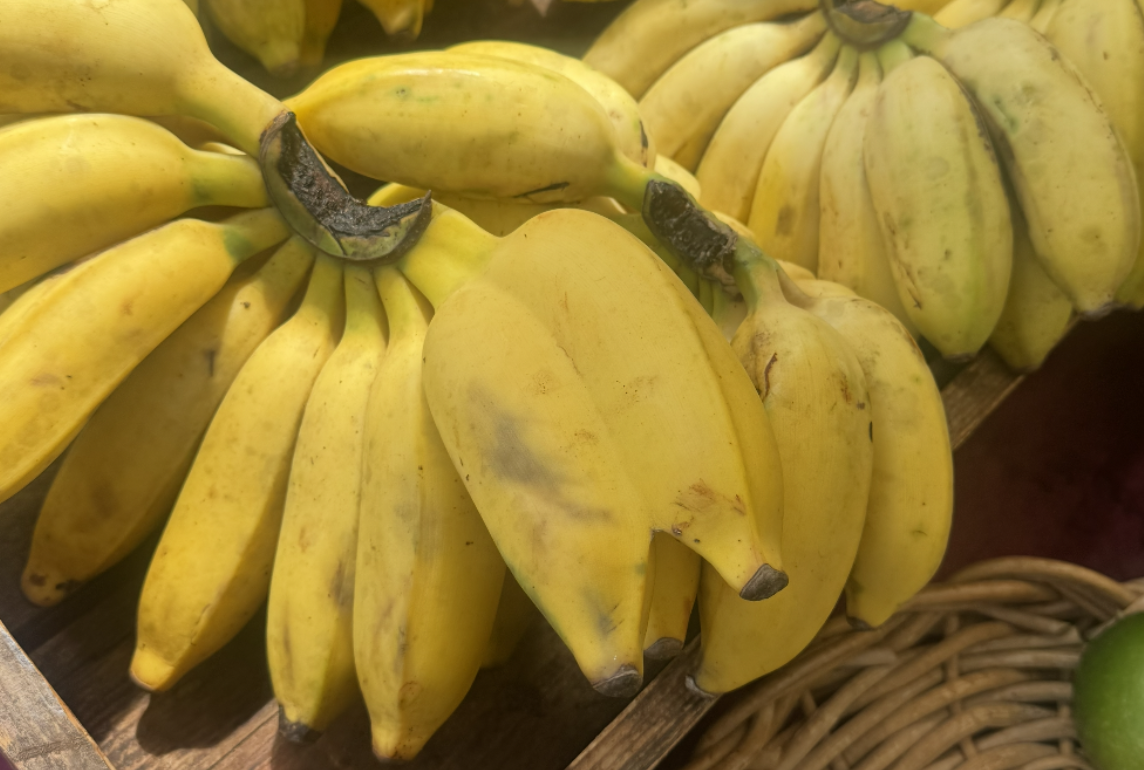
Banana twins! This is called a double banana or fused banana, and it's caused by fruit fusion—two developing bananas grow together into a single fruit because their ovaries fused very early in development. 👯♀️
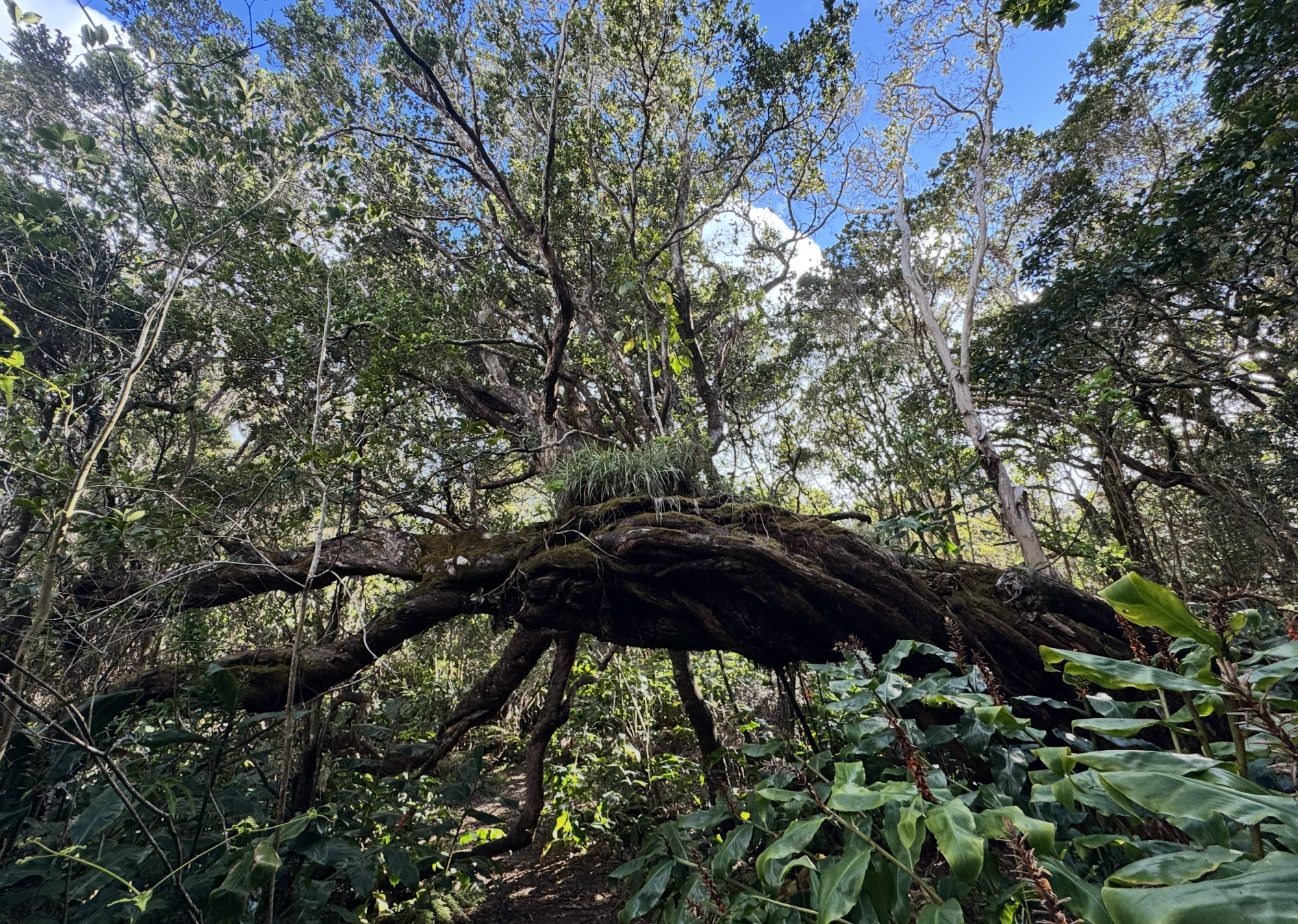
I have no idea what’s going on with this tree, but the tree basically formed a spider shape over a trail, with trees growing out of it! 🕷️
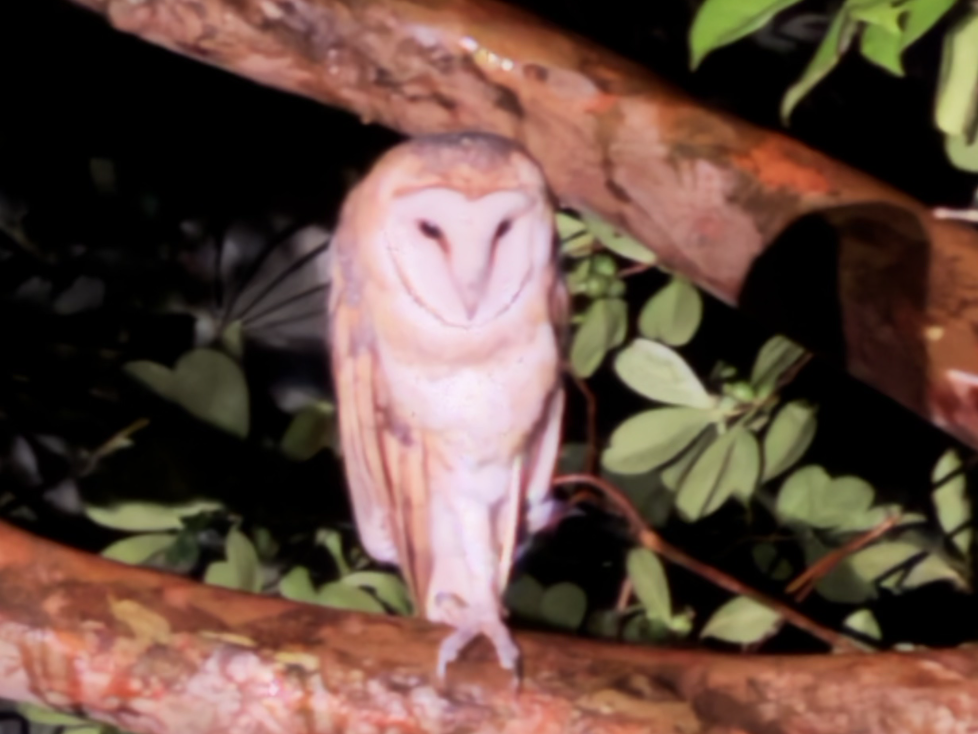
Was driving and saw this barn owl perched on a tree branch, illuminated by our headlights. It took my breath away!! 🦉
Forward to a friend: If you enjoyed this issue, please forward to a friend! They can sign up for the newsletter here.