Newsletter #62: 💧Drop by drop: What 40,000 minutes of breastfeeding taught me
A key principle for a meaningful life

One of the biggest commitments I’ve ever made is breastfeeding my baby. Unlike training for a marathon or writing a book, where you can take an occasional rest day, breastfeeding is a sacred contract requiring you to express milk around the clock or risk clogged ducts, mastitis, or a dropped supply. It requires monumental physical and emotional grit, making its lessons highly relevant to any seeker of a healthy, purposeful, and generative life.
It’s a journey I’ve longed to go on—both to support my baby’s health and to engage with this unique experience of being a woman and mother. Breast milk shapes the infant microbiome, transfers antibodies, and is associated with lower risk of chronic disease – including obesity, type 2 diabetes, and cancer – for both baby and mother. It is one of the highest ROI health investments we can make.
My breastfeeding journey has mostly been one of pumping milk. Over the past seven months, I’ve pumped on 14 flights, at the White House, in Ubers, at restaurants, on hikes, in the Senate, at a wedding, on an NYC park bench, while walking my dog, and at the beach. I’ve experienced clogged ducts, low supply, spilled milk, blebs, and neuropathic nipple pain.
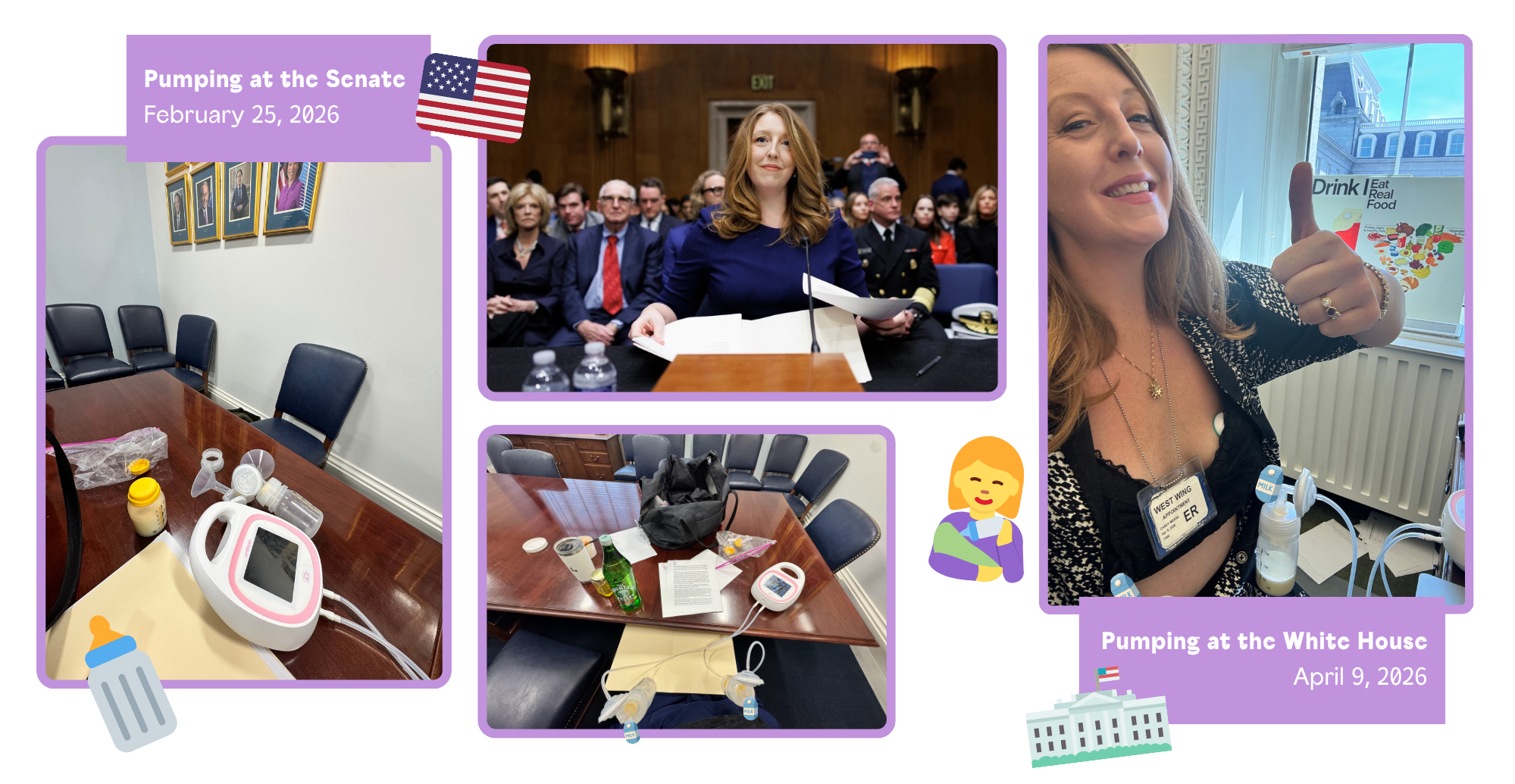
All in all, I’ve spent roughly 40,000 minutes on this task, often staring at the two plastic pump flanges attached to my chest, watching drop after drop emerge from my body and plop into collection bottles. In the tired quiet of the 3 AM pumps, I’ve often wondered whether work measured in ounces really matters at all. I've wept during pumping sessions reflecting on the years of tireless work mothers, families and communities put into raising and feeding every single child on Earth—and how a single senseless act of violence can kill in a second a life that took years to nurture.
But those 40,000 minutes have slowly changed how I understand life. They have taught me that important acts of creation do not happen through grand gestures, shortcuts, or hacks, and they can’t be rushed. The force of creation happens through small acts, repeated faithfully, with imperceptible progress, long enough for a miracle to emerge.
As I’ve watched drops of milk slowly accumulate into a thriving little human, I’ve begun to wonder whether this aspect of creation governs almost everything that matters in life—and whether forgetting it helps explain not only our growing collective dissatisfaction, but also the destruction of health, community, civility, and biodiversity around us. Modern life increasingly offers us outcomes without much participation, yet the deepest forms of satisfaction may come from rigorously participating in creation itself. This newsletter is a reflection on that possibility and a framework for finding greater meaning in our lives.
🌱 Creation requires small acts repeated with devotion
The process of breastfeeding makes me think about Jerry Seinfeld's famous "don't break the chain" strategy: he advised aspiring comedians to just write at least one joke every day and mark a big red X on the calendar when they do it. It’s not about sitting down and writing a genius Netflix special today. It’s to trust that engaging with the craft every single day – possibly for years, decades even – may will eventually alchemize something groundbreaking. It is the same with feeding a human from birth: it’s a daily commitment to a simple task – pump, feed, pump, feed – and then all of a sudden there’s a giggling boy pulling himself up to stand, looking back at you with pride - a miracle of the greatest magnitude.
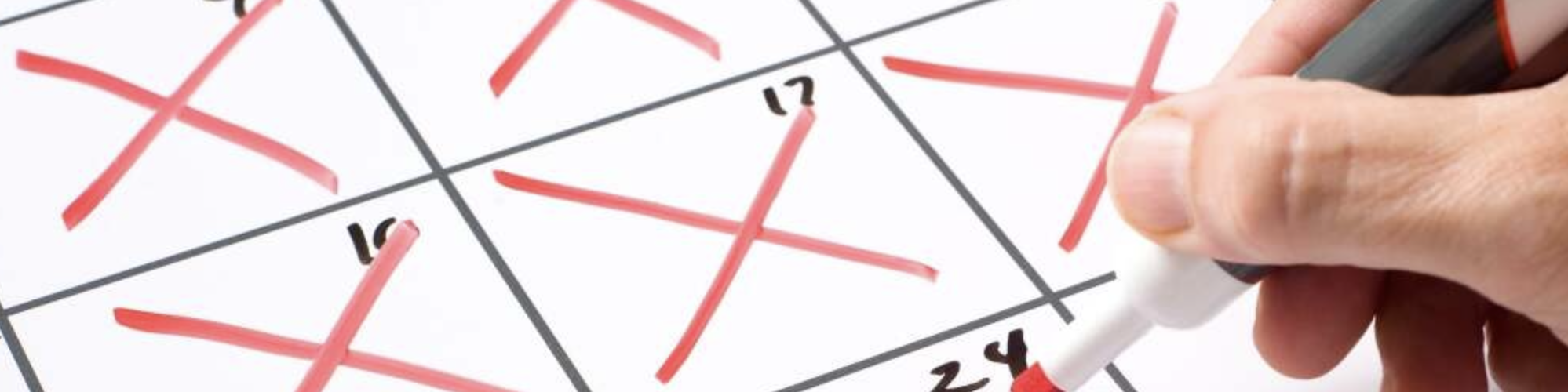
Credit: Mike Flippo
Why does understanding this concept matter?
Because our culture is increasingly focused on efficiency, optimization, technology, and shortcuts in the creation process. Dinner? Doordash. Happiness? Zoloft. Dream body? Ozempic. Essays? Claude.
Yet despite all this innovation, mental health is worsening, life satisfaction is declining, and IQ appears to be going down. There’s even a trend toward lower birth rates and increasing infertility — literally, less desire and ability to even create life. Something isn't adding up. We are increasingly outsourcing our creative capacities to technologies that promise to do things better and faster, freeing us up for... more. Yet many people feel chronically stressed, disconnected, pessimistic, and unfulfilled, while the natural world around us is also struggling. What's going on?
🍞 Spiritual implications of bypassing the creation process
I am a novice student of Kabbalah, but there is a concept called "bread of shame" that touches on all of this and is a helpful framework. “Bread of shame” is the spiritual discomfort that comes from receiving blessings without having participated in the work of creating the vessel to hold them. The idea is that the soul does not merely want to receive—it wants to literally become a co-creator with God.
Since God is the Creator, we become more like God through creating, giving, building, and participating in the ongoing work of creation ourselves. As humans, we have the privilege of being co-creators with God, and receivers of God’s blessings. That’s the spiritual duality of being human.
Kabbalah teaches that we expand our vessel for receiving through "restriction" — the process of pausing before reacting to our impulses. We also expand it through generosity, spiritual practices like prayer, and willingly leaning into discomfort. The idea is that every time we choose the harder path over the easier one — showing up when we'd rather relax, giving when we'd rather hold back, doing thoughtful work when a shortcut is available — we stretch our capacity to hold more light without being overwhelmed by it (shattering our vessel). Kabbalah teaches that when we expand our vessels, we create the conditions to receive abundant miracles.
It makes me wonder whether some features of modern life offer a form of bread of shame: unprecedented convenience, abundance, and efficiency without requiring us to participate in the process that gives those blessings meaning or that expand our vessel. Perhaps this is why endless apps, one-click deliveries, single-use products, and AI chatbots aren't making us happier or smarter. We are getting more of what we think we want, but not necessarily becoming more capable of receiving it in a way that doesn’t harm us.
⚖️ Tipping the scales of creation vs destruction
While convenient in the short term, the problem with our mass adoption of technologies that largely circumvent process is that it can seduce us into believing that the outcome matters while the journey does not. A linear focus on outcomes over process can also seed decision-making that generates less sustainable outcomes, an “any means justify the ends” mentality that leads to rapid growth but a wake of destruction, and doesn’t engage long enough to consider the “seven generations” thinking of indigenous culture.
In losing our sense of value of the process of channeling and harnessing our unique creative gifts, I wonder if we’re seeing this reflected in a larger imbalance toward destruction on planet Earth: the mass extinction of biodiversity, the rise in teen depression, cultural polarization, and the epidemic of chronic diseases and neurodegeneration taking place across the lifespan. As above, so below.
Destruction isn’t inherently bad — it’s required in living systems to clear out what’s not needed (e.g., natural forest fires, controlled cell death) but the balance between creation and destruction matters a lot. Unlike creation, destruction is often fast, easy, and complete, so when this force becomes dominant it can cause imbalance quickly:
A forest can take centuries to mature and days to chop down. (Just read The Overstory to find out).
A town can take decades to build and minutes to burn to the ground. (I saw this firsthand in the Palisades fire).
Cell replication (mitosis) takes twenty times longer than cell death (apoptosis).
Trust can take years to cultivate and minutes to rupture.
We should absolutely welcome innovations that reduce needless suffering and drudgery. For instance, the efficiency of my Vitamix helps me make more home cooked meals (which is an act of creation). Our countertop bottle washer helps my husband and I clean pump parts and bottles quickly so we can spend more time playing with our baby. I’m not suggesting primitivism, but rather for discernment in whether the technology we are using is meaningfully enhancing our ability to manifest our peak creative work – or if it is subverting it.
🫂 How do we embrace our gifts as creators
As I move through this breastfeeding journey, I find myself wanting to make more decisions that embody “creator energy”—not just for my own life, but as a vote for the kind of world I want to see: one with more health, more connection, more regeneration, and more life. I won’t do it perfectly, but it feels like a worthwhile direction to move.
Here's a simple example. If I buy a single-use plastic water bottle at the grocery store, it offers a small amount of convenience. But that bottle will likely sit in a landfill for centuries, it’s made from fossil fuels, it sheds microplastics into our bodies and environment, and it turns hydrocarbons that once participated in Earth's living systems into waste that no longer does. In that sense, it represents destructive energy.
In contrast, filling a reusable glass bottle with filtered water requires a bit more forethought, but it creates less waste, reduces exposure to toxins, and supports both personal and environmental health. It's a small act, but creation often works through small acts.

🏋️ Bringing creator energy to our health journey
This all applies to our health journeys too — and I say this as someone still figuring out how to rebuild fitness post-partum, in a body and schedule that is very different from pre-baby. Think about it:
Do 10 pushups today and you'll be sore and see no progress. But do 10 pushups every day for a year and you've done nearly 4,000 reps — and become someone who knows they show up for themselves.
Eat one nourishing meal and not much shifts. Eat a thousand whole food meals over a year and your energy, labs, sleep, and mood will likely be significantly improved.
Take a 10 minute morning walk and it likely brightens your day. Walk every morning for a year and you've covered hundreds of miles — and likely feel fundamentally more grounded and calm.
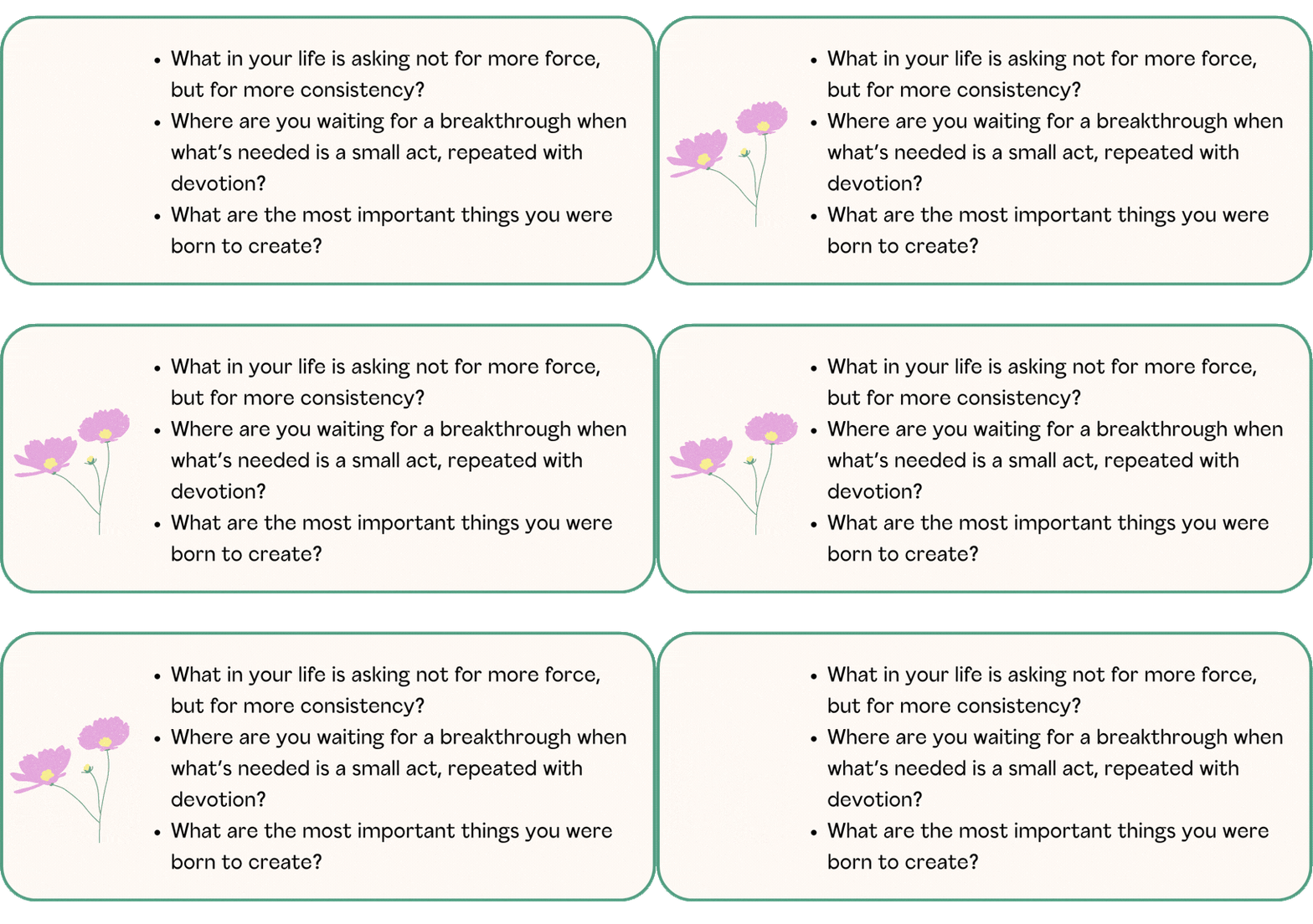
Questions I am going to be reflecting on…
Predictably, I'm pumping in the wee hours of the night as I finish this essay, and – to my own surprise – I find myself feeling so grateful for the teacher that breastfeeding has become. It has shown me that my best and most impactful work comes from showing up consistently, from committing to small daily investments and trusting their compounding impact, and from asking whether a shortcut deepens my participation in something that matters — or insidiously replaces it.
✨ Here's to trusting that today's drops become tomorrow's miracle,
Casey
PS: I received hundreds of incredible emails after the last two newsletters. THANK YOU! My team is extremely small, so we cannot reply to them, but please know that I read them and am so grateful for your reflections, your stories, and your synchronicities. Please also note, my team and I can never reply to individual health questions. If you are looking for health support or practitioners, please see resources I’ve put together here.
🍼 One more important note: I recognize that my breastfeeding journey has been shaped by privileges and supports that many families don't have. Too many families face structural barriers that make breastfeeding difficult or impossible, and that needs to change.
🌟 More Resources
I am not a Kabbalah expert by any means, but I’ve learned most of what I know about this beautiful spiritual philosophy from Cathy Heller and David Ghiyam, two people I greatly admire. I highly recommend listening to their podcasts and taking their courses:
Everything is Energy with Cathy Heller on Apple Podcasts, Spotify, or YouTube
The David Ghiyam Podcast on Apple Podcasts, Spotify, or YouTube
Forward to a friend: If you enjoyed this issue, please forward to a friend! They can sign up for the newsletter here.