Become a pro-boundary setter by meditating on your miraculous light 💡☀️
By Casey Means
In Good Energy, I talk a lot about the importance of boundaries - both physical and emotional - for health. Boundaries are defined as a “real or imagined line that marks the limits of something.” We usually think of psychological boundaries (like saying “no”), but there are very real physical ones that affect our health as well, like the barrier of our gut lining.
Below is an exclusive excerpt from Good Energy that describes that gut lining as one of the most important boundaries in our lives:
In one frame of reference, the gut is just a tube of tissue. In another frame of reference, it’s the interface between the cosmos (i.e., everything in the universe) and “ourselves.” As with all relationships, poor boundaries lead to toxic outcomes. No boundary— physical or psychological— is more important than your gut lining. I’ve worked on personal boundaries a lot in therapy, and I am convinced that healthy emotional boundaries— such as being clear and vocal about what you will and will not let into your life— is what makes relationships functional. Your gut lining is a boundary between you and everything else in the universe that is poised to inundate and overwhelm your biology and generate unrelenting inflammation. Healing and strengthening your gut lining with food— therefore creating and strengthening this critical boundary and reducing intestinal permeability or “leaky gut”— allows you to be selective about what you want to take in from the universe on a material level. You can choose what serves you.
It is also critical that we set psychological boundaries so that we protect what information comes through our senses into our minds, since everything we take in (i.e., what we hear, see, and experience) will directly impact our biology.
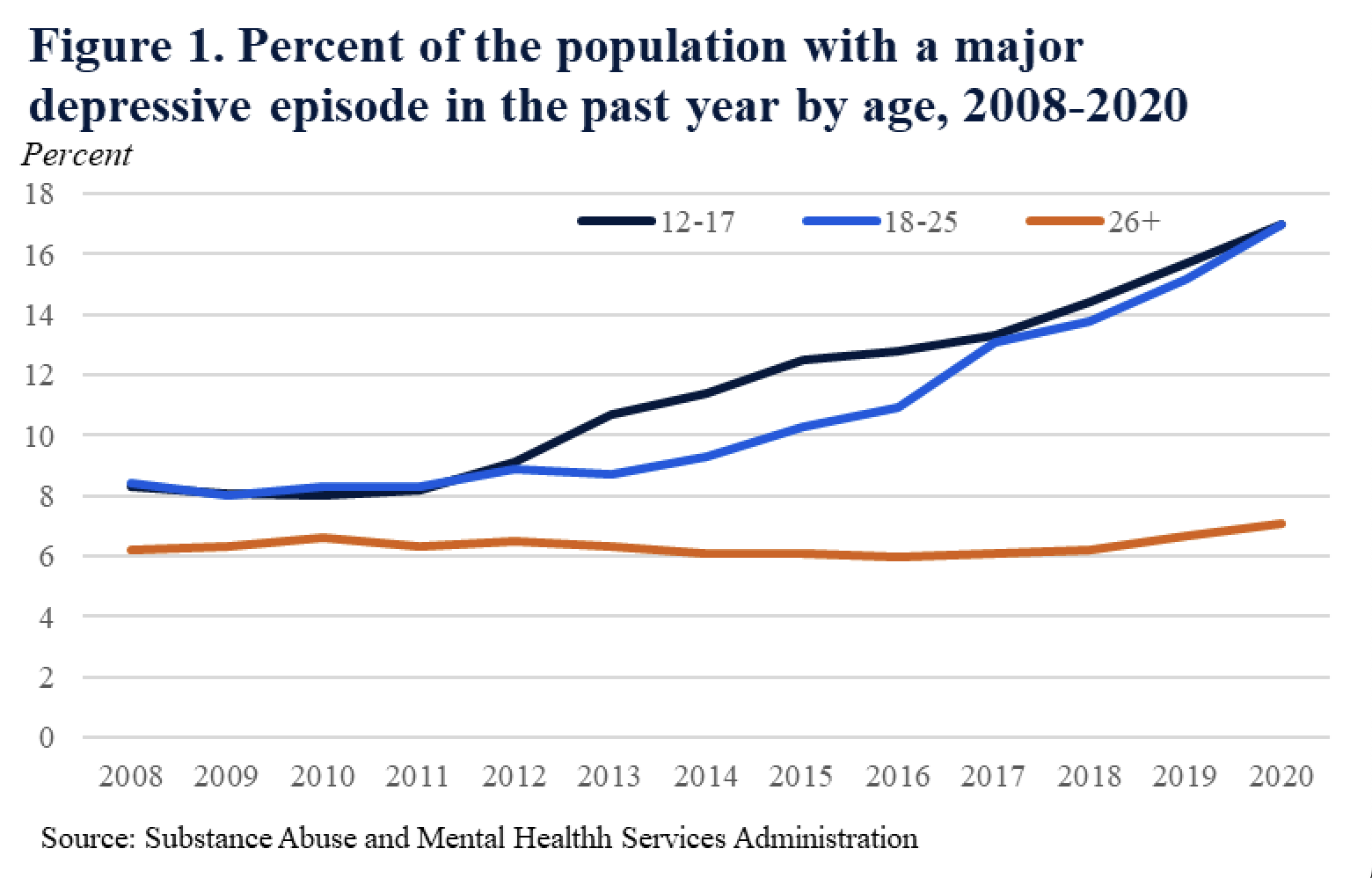
Our cells “hear” every thought we have through how our psychology translates to biochemistry: hormones, neurotransmitters, nervous system activity. And in the modern technological age, we are experiencing an unprecedented influx of fear-inducing, stressful information due to technology, and our biology is getting overwhelmed (as evidenced by the astronomically rising rates of mental illness in our culture).
A cell living in a body experiencing chronic fear is a cell that cannot fully thrive. When our cells sense sustained danger, they divert resources to defense and alarm pathways instead of normal functions that generate sustainable health. In the span of just a century, we now have the technological capability to be exposed to the threats facing any person, anywhere in the world, twenty-four hours a day, all live-streamed to a screen in our hands. Overnight, the traumas and fears of eight billion others have all become ours to process. Since fear and stress crush all aspects of metabolic health (by generating oxidative stress, chronic inflammation, and mitochondrial dysfunction), we need to be extremely selective and cognizant about what’s going into our minds (just as we need to be thoughtful about exactly what goes into our mouths).
As I mention in Good Energy:
“Don’t confuse setting boundaries to what information you allow in your ears and eyes with putting your head in the sand; it’s understanding and protecting your biology so you don’t implode. This allows you to show up with maximal energy to positively impact the world.”
Which brings me to my last point about boundaries. One of the ways to feel more confident in setting boundaries consistently and ruthlessly – like being able to easily say “no” to people and things you don’t really want to engage with, actively choosing how to spend your time, and not “over-giving” when it doesn’t feel right – is to solidify the deep belief that YOU, your time, and your unique internal light are worth protecting. We protect what we value and respect, which means the journey of setting boundaries effectively must start with making sure we value and respect ourselves on the deepest levels.
If we are chronically over-giving, over-functioning, over-everything-ing and it doesn't feel right, we may burn out or get depressed, and that can extinguish our “light” altogether.
I've been there: I fully burned out in surgical residency. I worked myself into mental and physical illness because I thought my personal value was in how much I could give as a surgical trainee, even as a voice inside me was screaming that the operating room was NOT where I was meant to be shining my light. And because I didn’t listen to that internal voice, my spark got extinguished, which showed up as depression and physical illnesses like chronic pain, acne, and leaky gut, both of which I dealt with for about two years.
A good metric of when to set a boundary and say “no” is when the choice in question is not a “whole body YES,” a term coined by leadership coach Diana Chapman, author of one of my favorite books, 15 Commitments of Conscious Leadership. We need to normalize tuning into our body’s deep wisdom and understanding what a “whole body YES” feels like, as compared to what doing something out of “should” energy feels like. They are very different. In my experience, a “whole body YES” feels incredible, expansive, and elevating. On the other hand, decisions made from “should” energy (meaning you make a decision because you feel like you should do something or you’re making the decision based on projecting what another person wants or thinks) will often feel constricting, triggering, resentful, or icky.
If we are not setting boundaries well in our lives (with family, friends, technology, work, food) - and we end up feeling haggard, tired, or overwhelmed... it might not be that we just need more "tactics" for how to set boundaries and more "time-management" strategies to implement.
Rather, it might be that you need to examine whether you actually believe on the deepest possible level that YOU and your light are worth protecting, and go on that journey first.
I don't believe anyone will ever prioritize protecting our time and our energy if WE personally aren't protecting our own time and our own energy (by setting clear boundaries). It’s often easier to blame people and systems outside of us for violating our boundaries or causing us to be overwhelmed, but that conveniently ignores that we often aren’t even holding boundaries for ourselves.
So how do we get to a place where we DO feel a sense of urgency and ruthlessness in respecting our time, mental health, and bandwidth by setting boundaries? Here are a few ideas:
Meditate on your miraculous true nature: I think step 1 is to meditate on and internalize that we are each a once-in-eternity miracle, that each of our lives is a statistical near-impossibility, that we are each a limitless spiritual being on a precious cosmic journey and fully one with source/spirit/God/everything.
Be aware of limiting beliefs: We also must untangle the profound limiting beliefs that are baked into our system, our culture, our de-spiritualized Western world, our media… everywhere. The limiting beliefs that tell us to "get in line,” be orderly, be “good,” fit in, be predictable, don’t ask question, “trust the experts,” and live a certain way. Even the pervasive view of the “body” as a “thing” is a limiting belief, when in reality we are a dynamic buzzing hive of energy and matter traveling through an infinite and eternal universe.
Understand boundaries are not selfish: We also benefit from really internalizing that by following our “whole body YES” nudges from the universe, and setting boundaries accordingly, we are choosing to cultivate our light SO THAT we can shine more of it to serve the world. It’s not selfish. We invest in and protect our rest and recovery so that we can be as bright and generative and creative as possible for the world. (For instance, if I had said hadn't said “no” to about 1,000+ things that people wanted from me or I thought they expected of me over the past 3 years, I would not have had the space and creative energy to write my book, Good Energy, which I know is the most important thing I need to give to the world right now. I know that writing the book - which was a full body “YES” in me — will do far more for others than having said “yes” to all those little things out of a sense of obligation or expectation. (Additionally, those “no’s” created the space for me to meet my partner, which was another huge priority for me!).
Know that many industries profit off poor boundaries: Remember that there are so many forces in the world that want to squeeze every ounce of profit and life-force from each of us and want to make us feel guilty for setting boundaries that create a functional, happy, generative, calm life. We are so useful to industry as stressed-out, frazzled, ill, dependent consumers of processed foods and healthcare services, as physical entities to put shots and pills into, as physical entities to cut things out of, as good worker-bees, as seated docile medicated students in classrooms, as little matrix batteries…
Boundary setting starts with believing that we are worth protecting, that we are limitless, and that the world benefits from us creating space for our creative life-force to cultivate and flow.
So that l leaves me with a question to meditate on: In this one precious life, what are you here to do, say, think, feel, love, and contribute? What needs to flow through you from source into this physical realm through YOUR unique and miraculous form? We need to aggressively fight for and protect the time, space, and energy to channel THAT. That's why we set boundaries.
With good energy 💓
Dr. Casey